 Selkirk Market Place |
Selkirk is an attractive town extending from the hillside location of its Market Place and High Street down steep slopes to the old woollen mills and more modern industrial estates along the valley of the Ettrick Water.
For many, Selkirk will be best known as a fixture on the A7, the traditional route from Carlisle to Edinburgh. The road still passes through the centre of the town, but the greater effort involved in navigating Hawick, eleven miles to the south, and Galashiels, six miles to the north, mean that despite its obvious attractions, Selkirk can leave less of an impression on the motorist.
Selkirk has an ancient history. The Romans built a fort a few miles to the south-west, but the hillside focus of today's town probably started life as the site of the church of the local Selgovae tribe after their conversion to Christianity in the 500s. In a remarkable continuity of use, the remains of the Auld Kirk could well occupy this original site.
In 1113, the future King David I used the church as the basis for a Tironensian Abbey he endowed in Selkirk. In 1128 the community moved to Kelso and set up Kelso Abbey instead. Selkirk continued to grow despite this setback, and had a Sheriff by 1258. And in 1301 a royal castle, Selkirk Peel or Pele, was erected on the south side of today's town. It was destroyed in 1334. (Continues below images...)
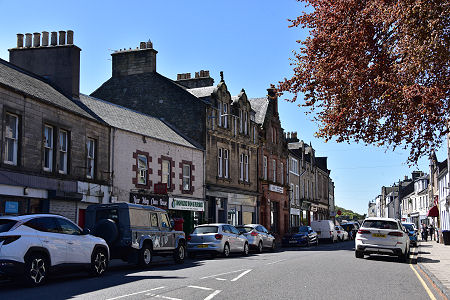 Selkirk High Street |
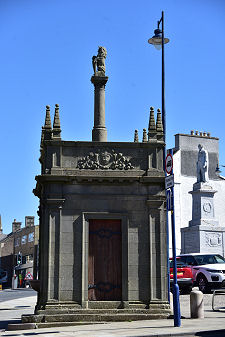
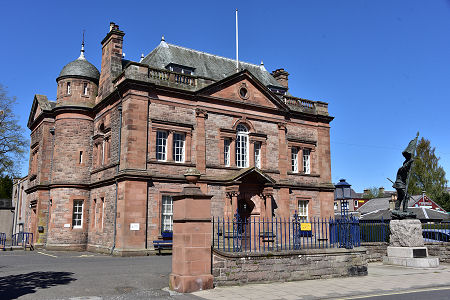 Victoria Halls and Flodden Memorial |
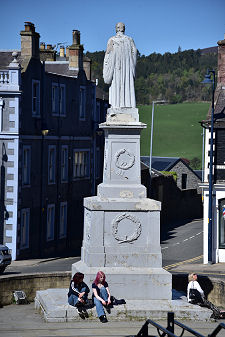
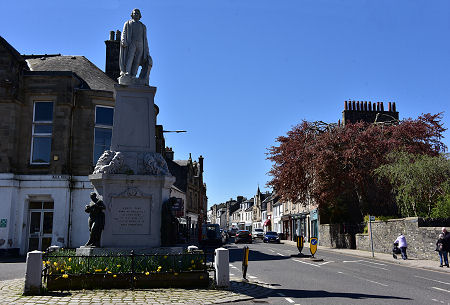 Statue of Mungo Park and High Street |
By the 1400s, Selkirk was a wealthy town trading via Berwick with Baltic Ports, and had developed a reputation for its shoemaking. But everything changed at the start of the 1500s. James IV's ill-judged invasion of England ended with the slaughter of most of the Scottish nobility and of James himself at the Battle of Flodden on 9 September 1513. With him died 79 of the 80 men in the Scottish ranks from Selkirk. And to make matters worse, the English then sacked the town and burned the wooden bridge over the Ettrick Water.
The town was rebuilt and its shoemaking industry re-established by the late 1500s. But it is for another industry that Selkirk is best known. 1767 saw the establishment of the first woollen mill here, producing yarn for use in Musselburgh. Dramatic expansion of the industry took place along the valley of the Ettrick Water during the first half of the 1800s. By 1869 seven mills employed a total of over 1,000 people, most involved in the production of the fine tweeds for which Selkirk was becoming known.
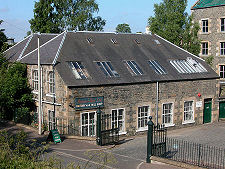
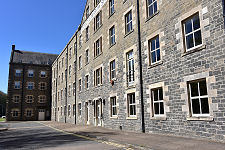
The textile industry sustained Selkirk for over a century before going into decline: and evidence of it can be seen in the stone mill buildings that have found or are still looking for alternative uses. But don't let anyone tell you that the industry has left the town.
One of the best known weavers in the Borders, Lochcarron of Scotland, relocated to Selkirk from Galashiels in 2006. And another excellent example of what remains can be found in the factory and mill shop of Andrew Elliot Ltd, where the challenges of the end of the 1900s were met by reliance on traditional skills and machinery, coupled with an international outlook and a high degree of flexibility: and by diversification into the design and manufacture of tartan.
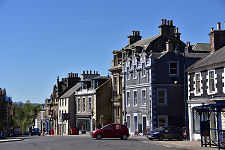
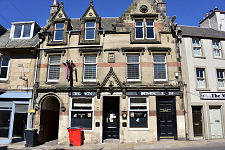
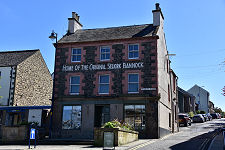
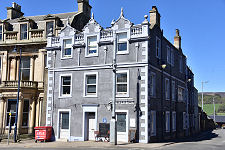
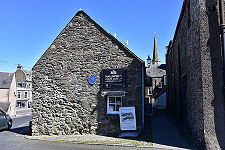
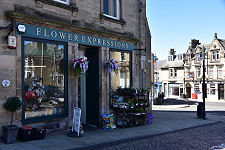
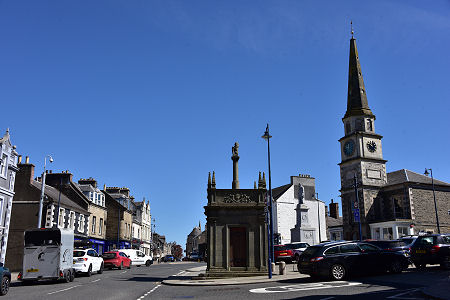
The heart of Selkirk today remains its market place, part of a medieval street plan that survived the English attack in 1513, even if most of the buildings didn't. Overlooking it from the south-east is the courtroom in which Sir Walter Scott acted as Sheriff of Selkirk from 1799 until his death in 1832. Sir Walter Scott's Courtroom now serves as a museum. In front of it stands the large statue of Sir Walter erected in 1839. Nearby is the excellent Halliwell's House Museum, which is also well worth a visit. Further along the High Street is the Mungo Park Monument, celebrating the African explorer born nearby in 1771.
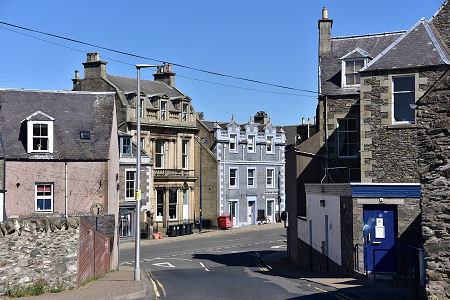 A Glimpse of Market Place from the Main Car Par |
|
|
|
Visitor InformationView Location on MapWhat3Words Location: ///disarmed.most.bridge |
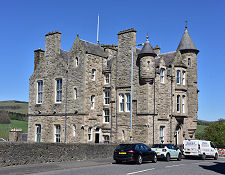 Selkirk Sheriff Court |
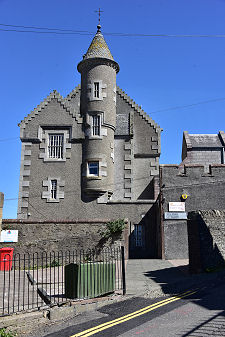 Selkirk Library |
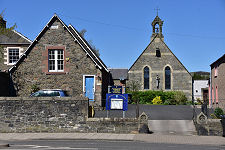 Our Lady & St Joseph RC Church |
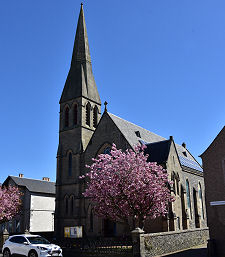 Selkirk Parish Church |
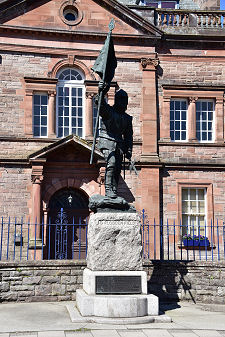 Flodden Memorial |
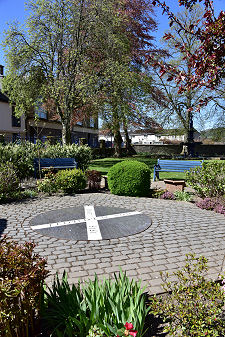 Flodden Memorial Garden |
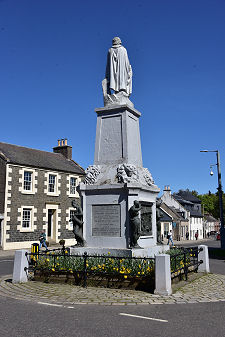 Mungo Park Statue |
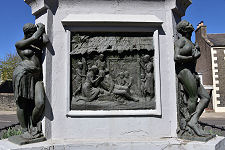 Plaque on base of Statue |
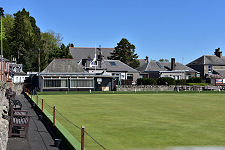 Selkirk Bowling Club |