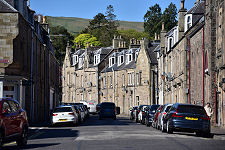
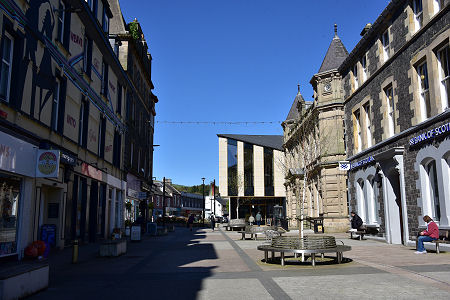
 The North-Western End of Channel Street |
Galashiels is a busy town on the main road from Carlisle to Edinburgh. It lies in the bottom of the steep-sided valley of the Gala Water a mile upstream of its confluence with the River Tweed. Though the town has worked hard to diversify in recent times, Galashiels' history has been closely tied to the fluctuating fortunes of the textile industry in the Scottish Borders.
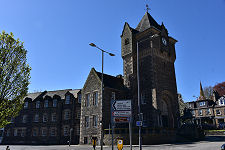
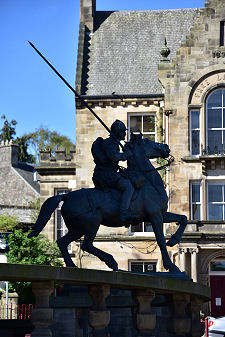
Overlooking the junction at the southern end of the town centre, where the roads comes together before heading south-east to Selkirk, is the town's most striking building, the Burgh Chambers. Originally built in 1867, the impressive clock tower added in the 1920s incorporates the town's war memorial and includes a beautiful statue of a mounted border reiver. Galashiels' war memorial was built to remember the 635 men from the town killed during the First World War, a remarkably large proportion of a pre-war population of 14,500.
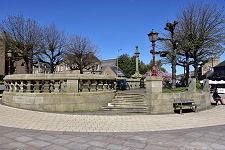
Opposite the Burgh Chambers in Cornmill Square is the Cornmill Fountain. This remarkable structure makes use of the old lade from a demolished corn mill on the site to accommodate a fountain and an unlikely variety of statues, including boys riding dolphins: all virtually hidden from view by the surrounding balustrade. (Continues below images...)
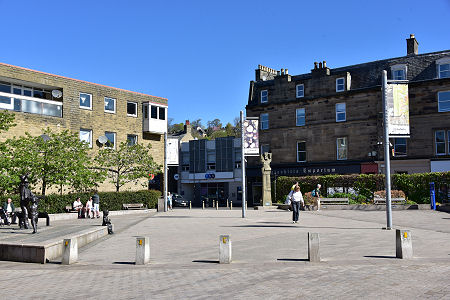 Galashiels Market Square |
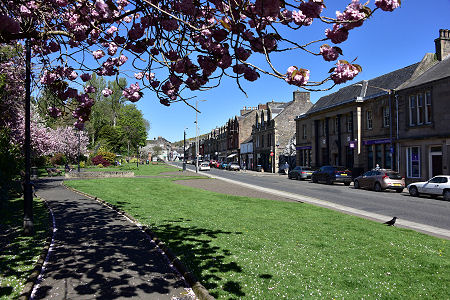 Bank Street Gardens |
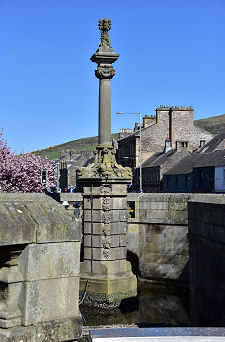
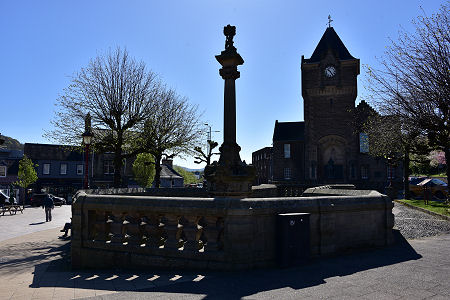 Mercat Cross and Burgh Chambers |
The fountain also carries the town's coat of arms: an image of a fox trying to pick plums from a tree with the motto "Soor Plums". The meaning of this will evade even the luckiest guess. It dates back to an incident in 1337 when a party of English soldiers, resting nearby after picking and eating wild plums, were surprised and defeated by townsfolk.
The main core of Galashiels lies on the south-west side of the Gala Water. Three parallel roads, Overhaugh Street, Channel Street and Bank Street come together to continue north-west as two, Bridge Street and High Street. Channel Street and High Street contain most of Galashiels' interesting collection of shops. The Gala Water has vehicle bridges at the two ends of the town centre, with the bridges crossed by Bridge Place and by Market Street. Between them is a pedestrian bridge, Douglas Bridge, linking the town centre with Galashiels' Transport Interchange.
East from the Burgh Chambers is where you would once have found the reason for Galashiels' growth. Here the riverside was lined with the woollen mills that caused the town's population to soar from 600 people in 1776 to a peak of 17,367 in 1890, when there were 21 mills in the town. The decline in the town's textile fortunes began in the 1890s and went on for a considerable period of time. The best known of the textile companies, Lochcarron of Scotland, relocated to new premises in Selkirk in 2006. Waverley Mill, which once dominated the riverside here, was subsequently demolished to make way for retail development.
Today's Galashiels has successfully diversified away from its old dependence on textiles. The town has also significantly improved its transport links in recent times. The "Waverley Route" railway from Carlisle to Edinburgh via Hawick and Galashiels originally opened for business in 1849, but closed in 1969. However, in September 2015 the rebuilt "Borders Railway" opened, connecting a station close to the town's Transport Interchange with Edinburgh.
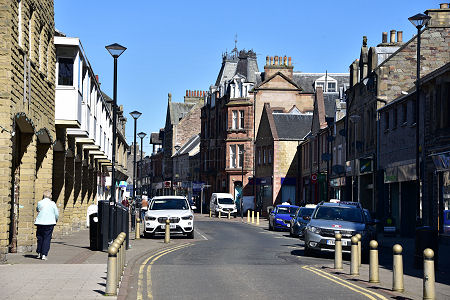 The South-Eastern End of Channel Street |
|
|
|
Visitor InformationView Location on MapWhat3Words Location: ///pouch.freely.treat |
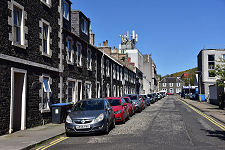 Bridge Street |
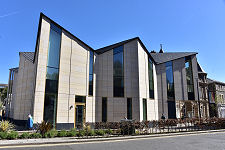 The Great Tapestry of Scotland |
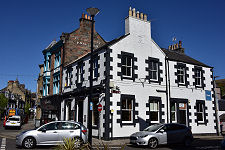 Cafe Auberge |
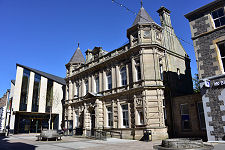 Old Post Office Building |
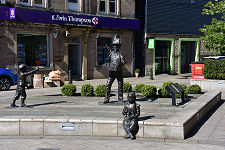 Coulters Candy Statues |
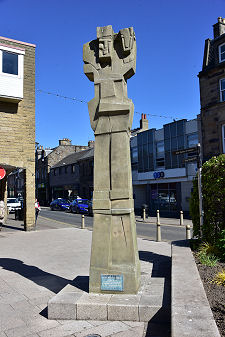 Man With a Sheep |
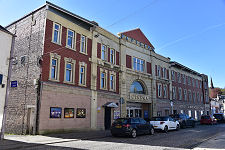 Pavilion Cinema |
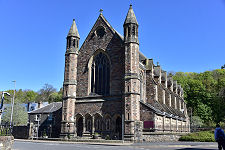 Our Lady and St Andrew |
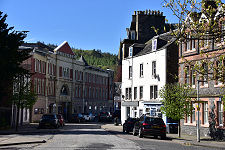 Market Street |
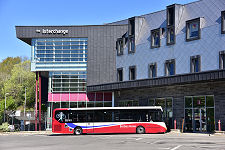 The Interchange |
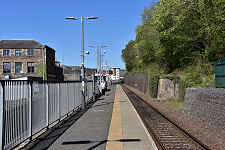 Railway Station |
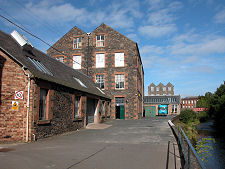 Long-Demolished Waverley Mill |