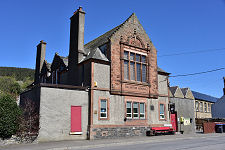
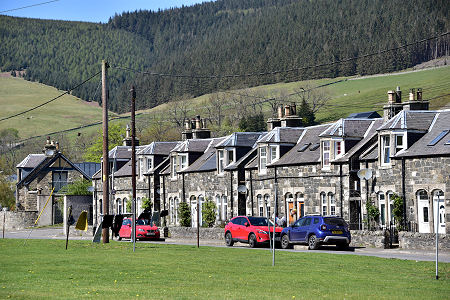
 Caberston Road |
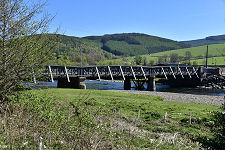
The village of Walkerburn lies on the north bank of the River Tweed a little under two miles east of Innerleithen and about nine west of Galashiels. For most people it’s somewhere glimpsed while driving through on the A72.
If you’d been here two centuries ago, you'd have seen nothing other than the River Tweed and the Walker Burn flowing down to join it from the high ground to the north. In 1846, Henry Ballantyne from Galashiels purchased land here and built a large woollen mill to take advantage of the power of the Walker Burn.
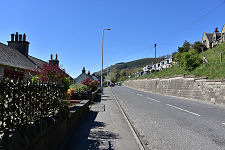
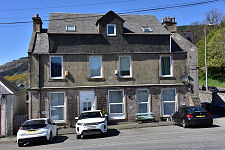
The architect Frederick Thomas Pilkington build a new village for the workers which came into being in 1854 and was given the name Walkerburn, for the obvious reason. The village was built along the northern slopes of the valley where it could give the workers' houses most benefit from sunlight and offer excellent views south. In 1866, Pilkington also designed a grand house for the Ballantyne family, "The Kirna", which was built further up the north side of the valley. (Continues below images...)
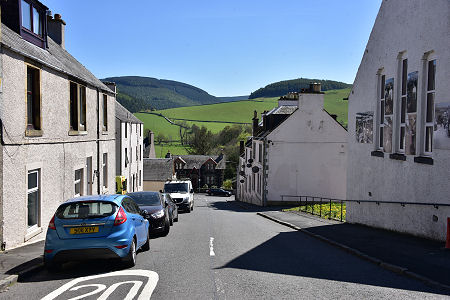 Jubilee Road |
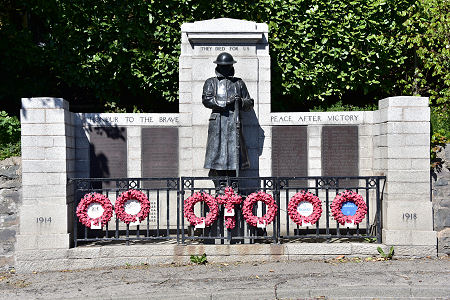 War Memorial |
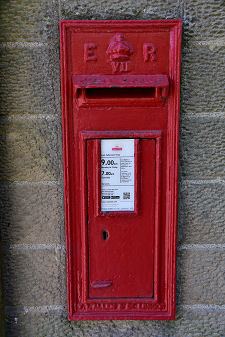
Another mill followed not long afterwards, and the railway arrived in 1866, the same year that a post office was built. A village hall was built in 1877 and the Church of Scotland in 1883, the year before a rugby club was founded.
In 1920-21, Walkerburn became the site of Scotland’s first pumped storage hydroelectric scheme. Water was pumped from the River Tweed to a reservoir high on Kirnie Law to the north, from where it could flow back down to generate power for the mills via a turbine.
The railway through Walkerburn closed in 1962 and the fortunes of the mills declined through the second half of the last century. The last one closed in 1988. Those that survive physically are used as business units. With the need for power diminished, the pumped storage system was decommissioned.
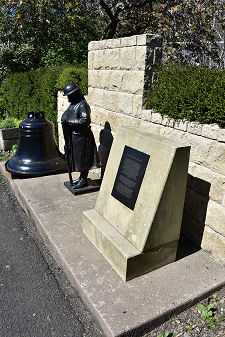
Walkerburn suffered an exceptionally high casualty rate, as a proportion of population, during World War One. A war memorial was built to commemorate the dead in 1921. In 1997 the war memorial statue, smaller than life size and known as the "wee man", was stolen and money was raised to provide a life-size replacement, which was unveiled in 1999. The stolen statue was found abandoned next to the perimeter fence at Edinburgh Airport in February 2000 and was returned to Walkerburn. It now stands next to the Mill Bell as part of a second memorial.
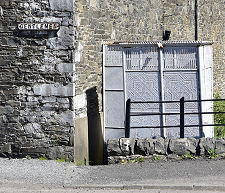
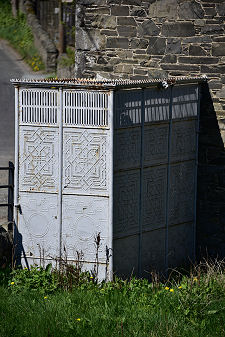
And, finally… On the basis of "blink and you’ll miss it," few driving through Walkerburn will probably notice the French style "pissoir" erected beside the A72 and next to a stone building on the west bank of the Walker Burn. The origins of this seem very unclear: as far as we know, it's unique in Scotland.
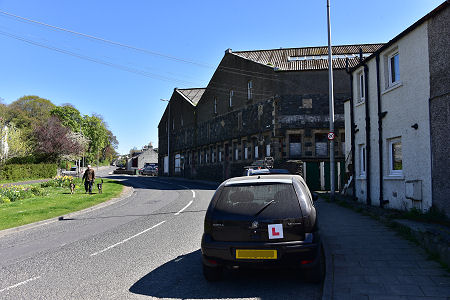 Former Mill on Galashiels Road |
|
|
|
Visitor InformationView Location on MapWhat3Words Location: ///pipe.reactions.refrained |
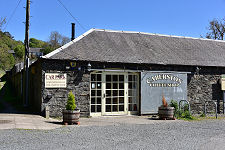 Caberston Coffee Shop |
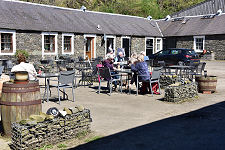 Coffee Shop Courtyard |
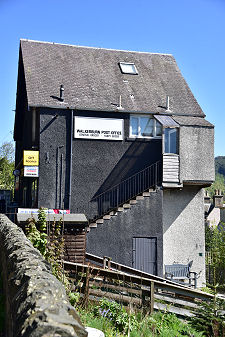 Walkerburn Post Office |
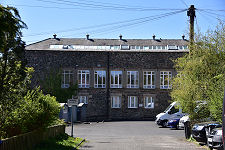 Tweedvale Mill |
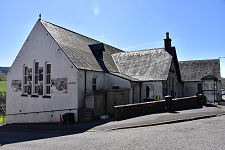 Public Hall |
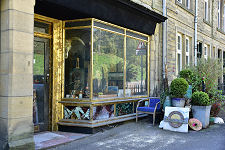 The Concrete Studio |
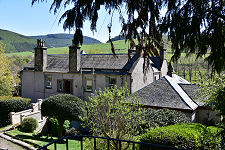 Views from a Hillside Location |
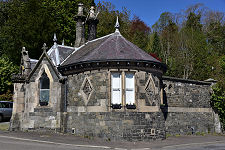 Gatehouse for The Kirna |
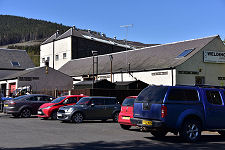 Industrial Units |