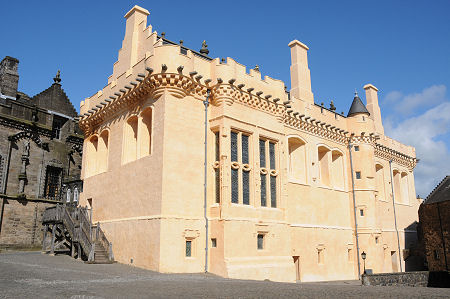
 The Great Hall at Stirling Castle |
Stirling & Central Scotland covers the local authority areas of Stirling, Falkirk and Clackmannanshire. For accommodation in Stirling & Central Scotland see the links in the "See and Stay" menu above. See the map below for an outline of the area and links to surrounding areas.
In March 2002 Stirling became Scotland's sixth city in celebration of the Queen's Golden Jubilee. The City stands in a strategically important position, at the lowest ancient crossing point of the River Forth. There is evidence of a fortress at Stirling as far back as prehistoric times, guarding the passage between the lowlands and highlands. Whoever controlled the fortress effectively controlled Scotland.
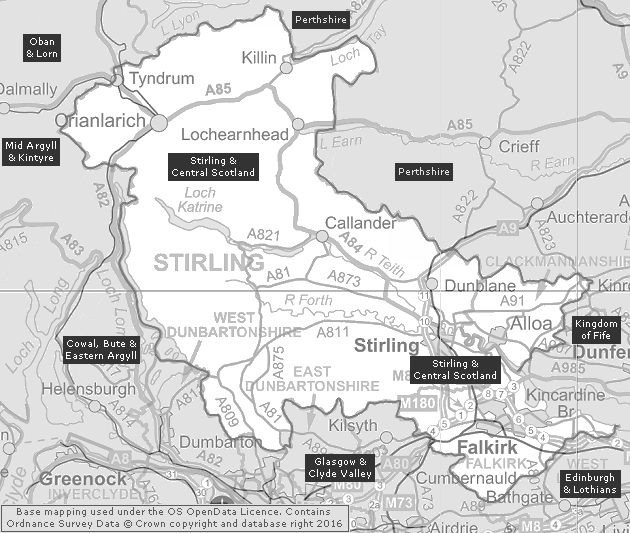 Stirling & Central Scotland, Showing Main Settlements & Connecting Areas |
Because of this, much of Scotland's history has been played out in or around Stirling. During the 1200s and 1300s control was wrested from the English, then lost: before being regained after the Battle of Bannockburn in 1314. It was at Stirling Castle, between the 1400s and 1600s that the Stuarts chose to make their home and it was where Mary Queen of Scots was crowned in 1543. In the 1700s Stirling once more became strategically important during the Jacobite rebellions. See our Historical Timeline.
Today, Stirling Castle dominates the skyline of the city and is an impressive place to visit. It sits upon a great crag with Stirling laid out below it. Views from the castle esplanade are excellent, most notably of the Wallace Monument and of the craggy outline of Dumyat and the Ochils beyond. In the old town are the Church of the Holy Rude and Old Town Jail. Both welcome visitors. Also of interest is Argyll's Lodging, dating in part from the early 1500s, but now restored to its 17th Century splendour, when it was an impressive town house. Just across the River Forth from Stirling are the remains of Cambuskenneth Abbey.
Two and a half miles north of Stirling is the former spa town of Bridge of Allan. An ornamental clock stands in the main street and the Holy Trinity Church contains furniture designed by Charles Rennie Mackintosh. On the banks of Allan Water and five miles north of Stirling is Dunblane. Dominated by its Cathedral it has been an important ecclesiastical centre since around AD600. Two miles east of Dunblane is the site of the Battle of Sheriffmuir, fought on 13 November 1715.
If you stand on the battlements of Stirling Castle the most obvious hill to the north is Dumyat with, at its foot, the ruin of Logie Old Kirk. Running east from Dumyat are the Ochil Hills, including Ben Cleuch and King's Seat Hill, which provide some excellent hillwalking. Hidden away towards the eastern end of the Ochils is Dollar Glen, with Castle Campbell at its head. Along the foot of the hills are the four "Hillfoot" settlements. From west to east these are: Menstrie (complete with Menstrie Castle), Alva, Tillicoultry and Dollar. The countryside north of the River Forth and east of Stirling lies in Clackmannanshire, Scotland's smallest local authority area. As well as the Hillfoots, other settlements include Alloa, home to Alloa Tower, and Clackmannan, with Clackmannan Tower nearby.
On the opposite side of the River Forth in the Falkirk local authority area lies the village of Airth. The nearby Dunmore Park is home to the remarkable Pineapple, and the ruins of a castle and a mansion, while the estate village of Dunmore is one of the prettiest in Scotland. Head south-west from the River Forth and you pass through communities like Cowie and Plean before coming to Denny, sandwiched between the M80 and M876 and in the shadow of the Campsie Fells. Two miles north-east of Denny are the little known Torwood Castle and the nearby Tappoch Broch and Torwood Blue Pool.
The south shore of the River Forth is full of dramatic contrasts. To the east lies Blackness Castle, close to the popular village of Blackness. Bo'ness shows its industrial heritage, but has turned parts of it to good advantage: the Bo'ness and Kinneil Railway is Scotland's largest heritage railway centre. Excellent places to eat in Bo'ness include Bo'ness Spice and Corvi's, an outstanding fish and chip shop.
West of Bo'ness the south side of the Forth is dominated by the major oil refinery at Grangemouth, which is also Scotland's largest port. Vast and modern, the Grangemouth refinery actually continues a long established tradition: the area was home to the world's first oil industry, developing from the 1850s using indigenous oil extracted from West Lothian's extensive shale deposits. On the edge of Grangemouth is the excellent Grange Manor Hotel. Close by is The Helix, a 350 hectare public open space. At its heart are The Kelpies, the world's largest equine statues.
Inland from Grangemouth is Falkirk. The line of the Romans' most northerly fixed line of defence in Britain, the Antonine Wall, can still be traced through the town, particularly in the park that now forms the grounds of Callendar House. More recently Falkirk, long known for its engineering and metalworking, especially the Carron Company, has become home to the Falkirk Wheel. This wonderful rotating boat lift was opened by the Queen in May 2002 and links together the Union Canal and the Forth and Clyde Canal. Not far from the Falkirk Wheel and close to Bonnybridge is Rough Castle Roman Fort, complete with one of the best preserved stretches of the Antonine Wall. Also nearby is the monument commemorating the Battle of Falkirk Muir, fought on 17 January 1746. Two distilleries offering tours have opened or reopened in Falkirk in recent times: Rosebank Distillery and Falkirk Distillery. At Slamannan, south-west of Falkirk, there is a remarkable collection of war memorials.
Eight miles north-west of Stirling on the A84 is the village of Doune. Its 14th Century castle was a popular royal hunting lodge. It is one of the best preserved of its type and was the location for the filming of "Monty Python and the Holy Grail". Nearby is the mill-village of Deanston, in which you find Deanston Distillery. Next to the B824 south-east of Doune is the David Stirling Memorial.
Carry on along the A84 and you come to Callander, which forms one of the main gateways to the Highlands and to the Trossachs. Sir Walter Scott and William Wordsworth and his sister Dorothy all favoured Callander and it lays claim to Rob Roy, Scotland's answer to Robin Hood. Callander is home to the Rob Roy and Trossachs Visitor Centre situated in the town square. Rob Roy is also remembered in the Rob Roy Way, the unofficial long distance footpath from Drymen to Pitlochry that passes through the area.
The scenic Callander to Strathyre cycleway is to be found north of the town leading, as the name suggests, to the village of Strathyre which sits astride the A84. The cycleway forms part of the National Cycle Network and this stretch is six miles long.
The Trossachs are often painted as a "Scotland in miniature", an area of lower mountains and lakes extending west and south from Callander to Aberfoyle, and interestingly reminiscent of the English Lake District. Whether the Trossachs would have achieved their fame without the influence of Sir Walter Scott is debatable; but while for some they are just the foothills of the real Highlands, for others they remain the most attractive part of Scotland. An especially pleasing but short climb is up the peaky summit of Ben A'an.
Between Callander and Aberfoyle the road passes Brig o' Turk and then south through the Achray Forest along the Duke's Pass. The Lodge Forest Visitor Centre is well worth a visit en route. Aberfoyle provides a good base for walking and cycling holidays. East of Aberfoyle and south of Callander is the village of Thornhill. Between Thornhill and Aberfoyle is the Lake of Menteith, home to Inchmahome Priory.
A little further north is the village of Balquhidder, which stands near the eastern end of Balquhidder Glen. Balquhidder Kirkyard is home to Rob Roy's grave. For those enjoying water sports, Lochearnhead, at the western end of Loch Earn, is a popular choice: as is St Fillans at its eastern end.
Killin is a pretty place set against a backdrop of the spectacular mountains of Breadalbane. The River Dochart tumbles through the town and the Falls of Dochart provide a popular tourist attraction. Other points of interest in Killin include the town church which houses an ancient font and, one mile from Killin, Moirlanich Longhouse, a restored mid-1800s Scottish longhouse. A minor road from the north end of the village to the west end of Loch Tay passes the ruins of Finlarig Castle.
Further west, Tyndrum and nearby Crianlarich between them form a major crossroads in the Highlands. From here, main roads head west to Oban, north to Fort William, east to Stirling, and south to Glasgow. The two villages also mark a key point on the public transport networks, with Tyndrum boasting two railway stations to Crianlarich's one. And there are daily bus services on all the main routes through the villages. There is plenty of accommodation on offer in the area including the excellent Crianlarich Hotel.
Further south is Loch Lomond. On its eastern side the B837 leads to Balmaha. Sitting directly behind it is Conic Hill, a humpy mound which stands on the geological line marking the beginning of the Highlands. This is a busy place in summer, being the stopping off point for boat excursions round Loch Lomond's islands. At the end of the road is Rowardennan, a favoured starting point for the ascent of Ben Lomond, Scotland's most southerly Munro. A track also continues eastwards from here forming part of the West Highland Way. This is the 95 mile long distance footpath from Milngavie, near Glasgow, to Fort William.
East of Loch Lomond, on the hills overlooking Endrick Water is the village of Drymen. Drymen lies on the route of the West Highland Way and is also the start point for the Rob Roy Way unofficial long distance footpath to Pitlochry.
Visitors choosing to stay awhile can rent bikes in the village and follow the Loch Lomond cycleway or take in a visit to Glengoyne Distillery, close to the attractive village of Killearn. In this area of gently rolling hills and farmland there is much to see and do. The Campsie Fells Trail links the villages of Fintry, Kippen, Gargunnock, Balfron and Lennoxtown. The Forth and Clyde Canal walk gives access to the second century Antonine Wall.
Driving Tours: Part of the east of the area is traversed by our Stirling & Dunfermline Driving Tour.
|
|
|
|
|
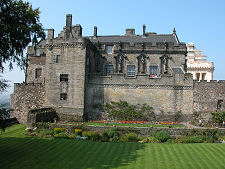 Stirling Castle |
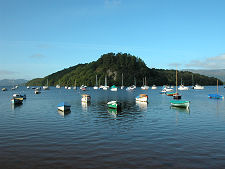 Loch Lomond at Balmaha |
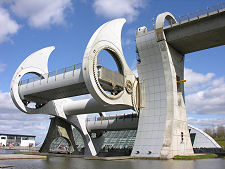 The Falkirk Wheel |
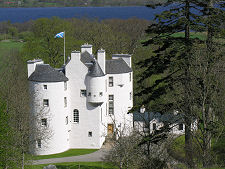 Edinample Castle |
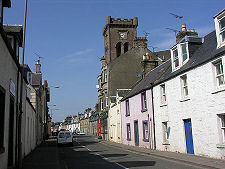 Doune |
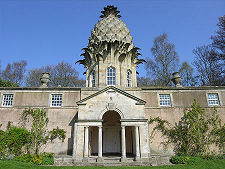 The Dunmore Pineapple |
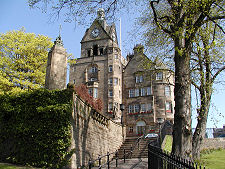 Stirling |
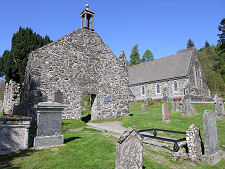 Balquhidder Kirkyard |
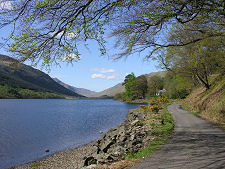 Loch Voil |
