Undiscovered Scotland

  • Home
  • Scottish Universities
      Index Page University of Aberdeen University of Abertay University of Dundee University of Edinburgh Edinburgh College of Art University of Glasgow Glasgow Caledonian University Glasgow School of Art Heriot-Watt University Uni of the Highlands & Islands Napier University Queen Margaret University Robert Gordon University Royal Conservatoire of Scotland Scotland's Rural College University of St Andrews University of Stirling University of Strathclyde Uni of the West of Scotland
  • Discover
    • Site Index
    • A-Z Indexes
    • Categories
    • Find Accommodation
    • Tours & Holidays ▼
      • Tour Operators
      • Walking Holidays and Guiding
      • Wildlife Tours & Holidays
      • Golf Tours and Holidays
      • Motorhome Hire
      • Cruising & Charter
      • Arts, Crafts & Photo Holidays
  • Site Resources
    • Late Availability
    • What's On?
    • What's New?
    • Links Collections
    • Hotel Reviews
    • Scotfax
    • Biography
    • eBooks
    • Book Reviews
    • Bookshop
  • Site Info
    • Contact
    • Site Information
    • How to Feature
    • Website Design Services
    • Twitter: Follow Us
    • Cookies & Privacy
    • Copyright, T & C

The University of Edinburgh

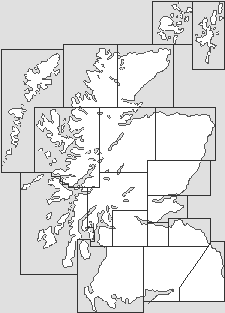
Clickable Index Map


Facts & Figures:

Established: 1582
Students: 35,375
Location: Edinburgh
WWW: www.ed.ac.uk
 
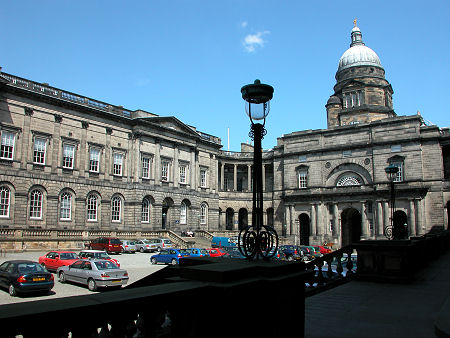
Old College, University of Edinburgh


Facts & Figures:

Established: 1582
Students: 35,375
Location: Edinburgh
WWW: www.ed.ac.uk


The University of Edinburgh lies in the heart of Scotland's capital city. Its buildings, many of considerable historical interest and architectural merit, are spread through the heart of the city, especially in the Old Town. Most are within walking distance of the centre, making this a true city centre university.

There is also a science campus a little to the south of the city centre, and many of the university's halls of residence are gathered together beside Holyrood Park in the shadow of Salisbury Crags. The more outlying facilities have good transport links to central Edinburgh. The university continues to invest in new facilities and grow: one example being the new informatics centre on the edge of the Old Town.

Academically, the University of Edinburgh is highly regarded. This is one of the reasons why its large student body is particularly diverse, with students coming from many parts of the world.

The university is divided into three colleges: the Colleges of Humanities and Social Sciences; of Science and Engineering; and of Medicine and Veterinary Medicine. Within the colleges are 21 "schools" covering particular subject areas. All teaching takes place over two semesters (rather than 3 terms), from late September to just before Christmas, and from mid January to the end of May, with a short Easter vacation. First-year students living outside Edinburgh are offered university accommodation, and Edinburgh is home to a large and thriving student-rental sector.

The Edinburgh University Students' Association provides services, representation and welfare support to matriculated students of the University of Edinburgh. The Edinburgh University Sports Union is the representative body of the 63 Sports Clubs and their members. The Centre for Sport and Exercise includes gyms, sports halls, a swimming pool and other facilities.

History

The founding of the University of Edinburgh can be traced back directly to Robert Reid, Bishop of Orkney and Abbot of Kinloss Abbey. On his death in 1558 he left significant funds for the founding of a seat of learning in Edinburgh, and these formed the basis of the university's endowment. The University was established by a Royal Charter granted by James VI in 1582, making it only the sixth university to be founded in the British Isles, and the fourth in Scotland. Funding came both from the endowment left by Bishop Reid and from the City Council.

In in the 1700s the University of Edinburgh was at the heart of the wide ranging revolution in thinking now known as the Scottish Enlightenment, a revolution that led the French philosopher Voltaire to say "we look to Scotland for all our ideas of civilization". Despite this, until the start of the 1800s, the university had no purpose built buildings, instead occupying a wide variety of rented accommodation. In 1827 this changed with the opening of the Old College, built on South Bridge by the architect William Henry Playfair to plans by Robert Adam.

More new buildings followed, including a new Medical School designed by Robert Rowand Anderson which opened in 1875, and the magnificent McEwan Hall, which was completed in 1880. The university is now also responsible for the oldest purpose-built concert hall in Scotland (and the second oldest in use in the British Isles) St Cecilia's Concert Hall, built for the Edinburgh Musical Society 1763; and in 1889 it opened Teviot House, the oldest purpose built Student Union building anywhere in the world.

The origins of the university library date back to a collection formed in 1580, two years before the university itself was founded. It has grown to become the largest university library in Scotland with over 2 million periodicals, manuscripts, theses, microforms and printed works. It is housed in the main University Library building in George Square, designed by Basil Spence and one of the largest academic library buildings in Europe. There are also a number of more specialised faculty and departmental libraries. In 2011 the previously independent Edinburgh College of Art became part of the university.

Notable People Associated with The University of Edinburgh

1500s
Bishop Robert Reid: Funder
1600s
Alexander Henderson: Ecclesiastic Martin Martin: Author Samuel Rutherford: Theologian
1700s
Robert Adam: Architect Joseph Black: Chemist James Boswell: Author Robert Brown: Botanist James Bruce: Explorer William Cullen: Doctor Thomas Dick: Philosopher Henry Duncan: Churchman Henry Dundas: Politician Duncan Forbes, Lord Culloden Sir James Hall: Geologist David Hume: Philosopher James Hutton: Geologist Robert Jameson: Mineralogist Field Marshal James Keith: Soldier Charles Macintosh: Chemist Henry Mackenzie: Author Colin Maclaurin: Mathematician Archibald Menzies: Doctor John Playfair: Mathematician John Rennie: Engineer William Roxburgh: Botanist Sir Walter Scott: Author Adam Smith: Economist Dugald Stewart: Philosopher William Symington: Engineer John Walker: Naturalist John Witherspoon: US Politician
1800s
Robert Rowand Anderson: Architect William Balfour Baikie: Missionary Alexander Graham Bell: Scientist Joseph Bell: Doctor Alexander Berry: Explorer Horatius Bonar: Clergyman James Braid: Doctor Sir David Brewster: Scientist Sir Thomas Brisbane: Soldier Alexander Crum Brown: Chemist William Speirs Bruce: Explorer Thomas Burns: New Zealand Thomas Carlyle: Author Sir William Cheyne: Doctor Sir Arthur Conan Doyle: Author Sir James Dewar: Scientist Thomas Drummond: Surveyor John Boyd Dunlop: Inventor Sir James Alfred Ewing: Scientist Hugh Falconer: Geologist Adam Ferguson: Philosopher John Duncan Fergusson: Artist George Forbes: Engineer James David Forbes: Physicist Sir Patrick Geddes: Planner Sir Archibald Geikie: Geologist Thomas Graham: Chemist Sir William Hamilton: Philosopher
   
1800s
James Hector: Scientist Thomas Henderson: Astronomer Edward Irving: Preacher William Jardine: Trader Sir William Jardine: Naturalist Sophia Jex-Blake: Doctor/Educator Robert Knox: Doctor Alexander Gordon Laing: Explorer Sir John Leslie: Physicist Robert Liston: Doctor Sir Robert Lorimer: Architect James McCosh: Philosopher William MacGillivray: Naturalist Chrystal Macmillan: Lawyer Sir James David Marwick Sir James Matheson: Trader James Clerk Maxwell: Scientist Sir Thomas Mitchell: Surveyor Lord Monboddo: Judge Alexander Monro: Anatomist Sir Roderick Murchison: Geologist William Henry Playfair: Architect John Rae: Doctor Sir James Young Simpson: Doctor Samuel Smiles: Author Sir Andrew Smith: Zoologist Charles Piazzi Smyth: Astronomer Robert Louis Stevenson: Author Peter Guthrie Tait: Physicist C. W. Thomson: Oceanographer Joseph Thomson: Explorer Andrew Ure: Doctor Sir James Wylie: Surgeon
1900s
Captain Eric Brown: Test Pilot John Buchan: Author J.M. Barrie: Author Donald Caskie: Tartan Pimpernel Helen Cruickshank: Poet Dame Margaret Kidd: Lawyer Jennie Lee: Politician Eric Liddell: Runner Sheila S Macintyre: Mathematician Sorley MacLean: Poet Robert Matthew: Architect Doris Reynolds: Geologist Marion Ross: Physicist Thomas Ross: Architect Margaret Fay Shaw: Musicologist Alastair Sim: Actor Margaret Thomson: Doctor Oswald Wynd: Novelist
   
Clickable Index Map

Copyright Undiscovered Scotland © 2000-2025