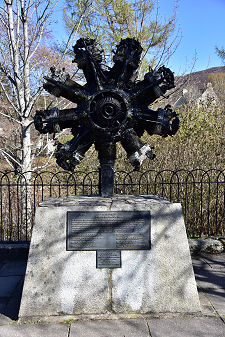
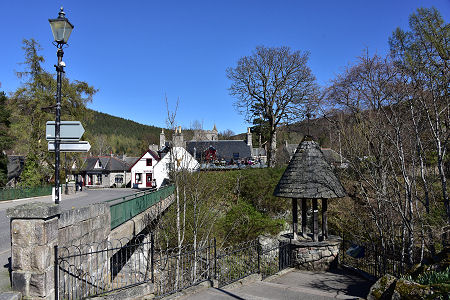
 Bridge Over the Cluny Water in the Heart of Braemar |
At 1,100 feet above sea level, Braemar shares (with Altnaharra) the record for Britain's lowest recorded temperature, of -27.2 degrees C, on 11 February 1895 and 10 January 1982. But this is not this attractive village's only claim to fame. A popular highland resort, Braemar enjoys a scenic location at the meeting point of three passes in Upper Deeside where the Clunie Water flowing north from the Cairnwell joins the upper River Dee.
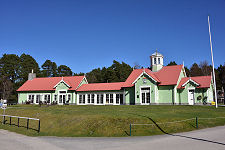
Braemar is probably best known for its highland games, the annual Braemar Gathering which takes place on the first Saturday in September. The games date back over 900 years, to the time when an annual contest between local clans was watched by King Malcolm III. The tradition of royal involvement was resumed by Queen Victoria after her purchase of the nearby Balmoral Estate, and successive generations of royals have maintained that tradition ever since.
Braemar's long history means that Braemar Castle, which stands half a mile to the north-east of the village, was the second to be built in or near the village. The first was Kindrochit Castle, whose remains stand above the right or east bank of the Cluny Water as it flows north through a ravine in the heart of Braemar. (Continues below images...)
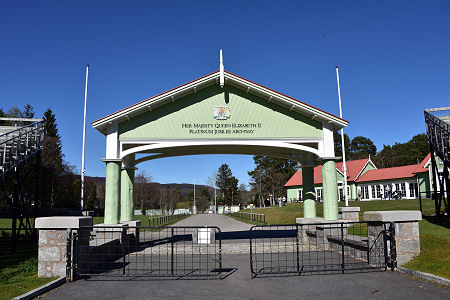 Home of the Braemar Gathering |
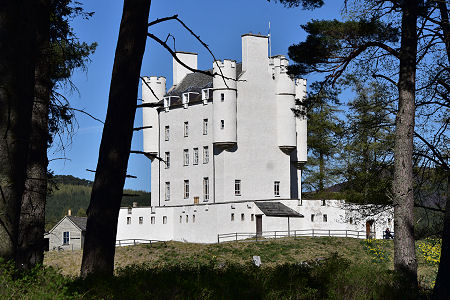 Braemar Castle |
The origins of Kindrochit Castle date back to the reign of King Malcolm III. He is known to have spent time in the area in the late 1050s and built a hunting lodge on this site, together with a bridge across the Clunie Water. The oldest part of the remains you see today date back to the building here of the Royal Castle of Kindrochit by King Robert II, probably in the early 1370s.
Robert II’s castle was significantly strengthened by Sir Malcolm Drummond, Earl of Mar, under orders from Robert III, in the years from 1390. Parts of the existing castle were demolished and the Drummond Tower was erected, on a different alignment to what had gone before. The circumstances of Kindrochit Castle’s demise are unclear, though a visitor recorded it as being in a ruinous state in 1618.
The more recent Braemar Castle was built in 1628 by the Earl of Mar. It was burned in 1689 but rebuilt in 1748 when it was leased to the government as a military barracks. Much of what now stands, including the star shaped outer wall, dates back to that time. Today it is run by the local community as a visitor attraction.
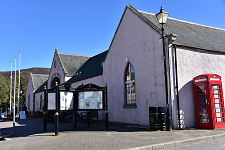
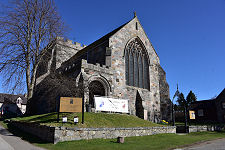
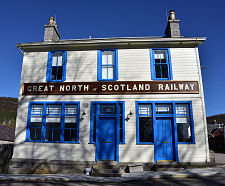
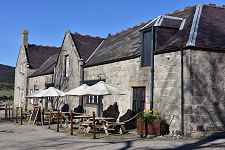
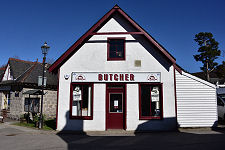
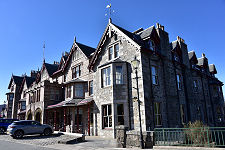
The centre of Braemar is a bustling place and a popular halt for bus tours. There is a variety of shops and accommodatiuon providers and, to the south of the village centre is Braemar Parish Church, with its distinctive spire. This is just one of four churches in the village, three of which are still active.
Braemar is also popular with outdoor enthusiasts and is situated in some excellent walking and climbing country. An easy ascent of Braemar's own mountain, Morrone, takes in spectacular views. Further afield is the more challenging Lochnagar, while on the A93 nine miles to the south is the Glenshee Ski Centre.
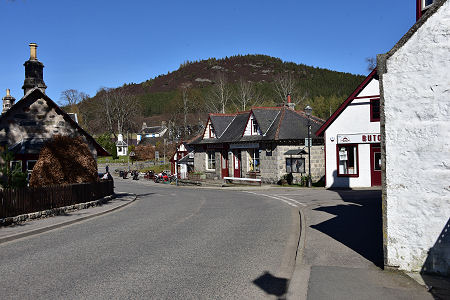 Invercauld Road |
|
|
|
Visitor InformationView Location on MapWhat3Words Location: ///firmer.clasps.sonic |
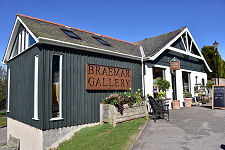 Braemar Gallery |
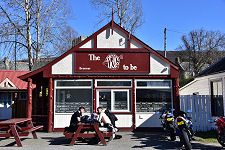 The Plaice to Be |
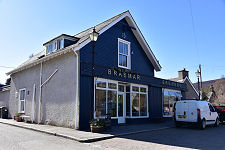 Braemar Brewery |
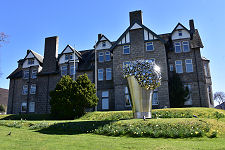 Invercauld Hotel |
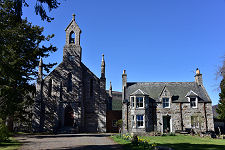 St Andrews RC Church |
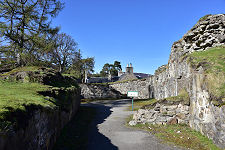 Kindrochit Castle |
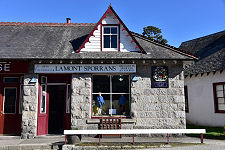 Lamont Sporrans |
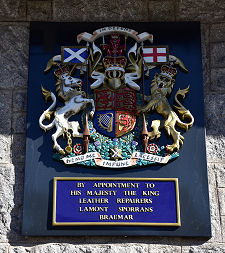 Lamont's Royal Warrant |
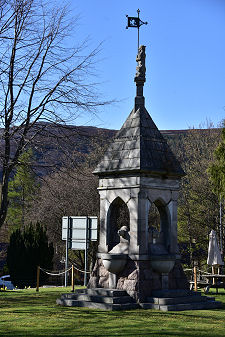 Drinking Fountain |