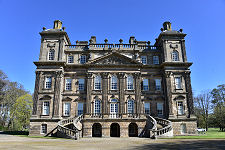
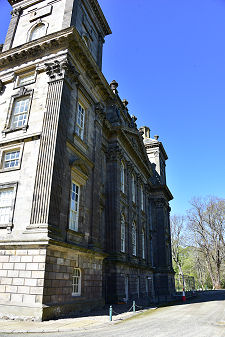
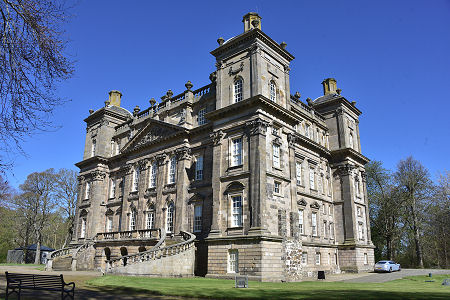
 Duff House from the South-East |
Duff House stands near the west bank of the River Deveron in parkland just to the south of Banff. The house is run by Historic Environment Scotland in partnership with Aberdeenshire Council and National Galleries Scotland, which provide most of the artworks on display.
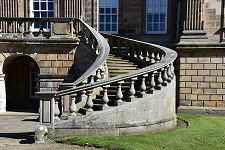
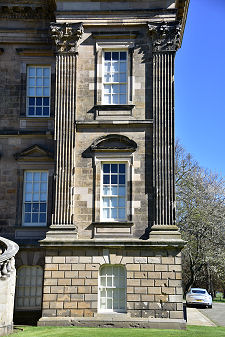
It is a truly magnificent building, especially if you catch it on a sunny day. Yet it’s also a slightly unsettling structure, a huge, and hugely ornate, stone box that looks oddly proportioned. There’s a reason for that. As originally designed, it was meant to be flanked by large pavilions linked to the main house by colonnaded quadrants, which would have given it a much better proportioned (and even grander) appearance.
That these weren’t built is down to disputes between the architect, William Adam and the man who commissioned the house, William Duff, Lord Braco, who later became the 1st Earl Fife. The two didn’t draw up a contract before work began in June 1735 and the result was a series of disputes about cost, the quality of the work, and the scale of the ambition.
The house as you see it today was largely completed in 1740, but the disputes continued, culminating in a court case in 1743. Lord Braco lost and effectively abandoned the house as a result. It is said he closed the blinds on the windows of his carriage whenever he passed within sight of it. (Continues below images...)
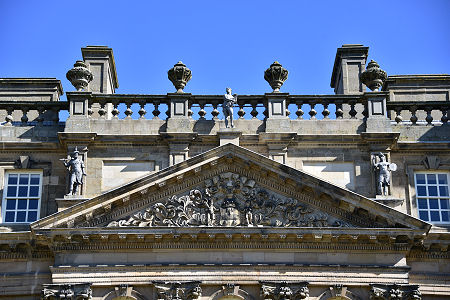 The Pediment on the South Front |
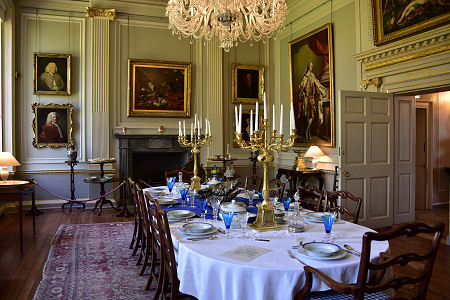 The Dining Room |
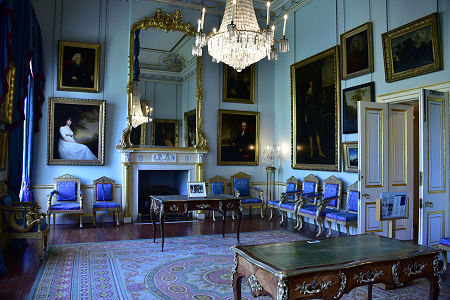 The North Drawing Room |
The house and grounds were brought back into use by the 1st Earl’s son, James Duff, later to become the 2nd Earl. The deletion of the planned wings meant there was never enough room for servants’ quarters and kitchens. This resulted in a detached kitchen block being built in 1759 as a stopgap solution, hidden by trees. The problem was only finally resolved when a new wing was added on the east side of the house in 1870 by the 5th Earl.
In November 1883, Duff House enjoyed its 15 minutes of fame when the 6th Earl played host to the Prince of Wales, the future King Edward VII and the 6th Earl’s future father-in-law.
Duff House ceased to serve as a family home in 1906 and instead was converted into a country house hotel, a role it fulfilled until 1913 and again in the 1920s, when it was advertised as “The Sportsman’s Paradise”, offering golf, tennis, fishing and shooting.
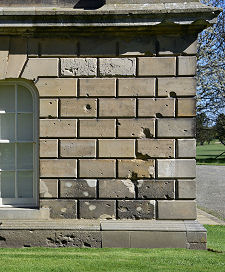
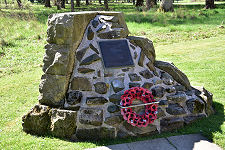
Between 1913 and 1923, Duff House was used as a private hospital, specialising in stomach problems and dietary conditions. During World War Two, Duff House was used as a detention centre for “enemy aliens”, and then for prisoners of war. On 22 July 1940 the house was attacked by a German bomber. The east wing was damaged and six German prisoners were killed, as well as two guards. After the war, the house was used by troops belonging to the 9th Polish lancers.
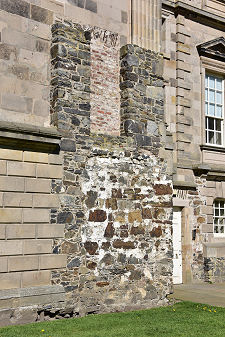
By the mid 1950s, Duff House was largely derelict, leading to its being taken into state care in 1956. In 1995 it became a country house art gallery following a major refurbishment, which included the removal of the remains of the 1870 east wing.
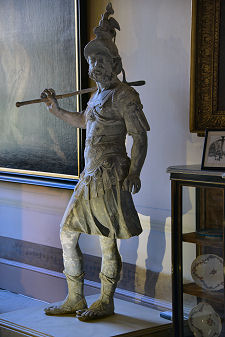
Today's visitors have access to a considerable part of the house. You enter via the ground floor doorway in the south front of the house, beyond which is the visitor reception and, at the back, a cafe which was no longer open when we last visited. The grandeur of the house is obvious from the first floor, which includes suites of rooms lined by doorways that give long views through them. Highlights include the dining room. The artworks on display are impressive. We were especially struck by a lead statue at the foot of the grand staircase that started life standing on the pediment on the south side of the house.
The second floor is as impressive as the first, with collections of drawing rooms and libraries, plus two temporary exhibition spaces. On the third floor vistors can access the well-named long gallery, finished in contemporary style for functions, and a room containing a large model of Duff House as its architect originally envisage it, complete with wings.
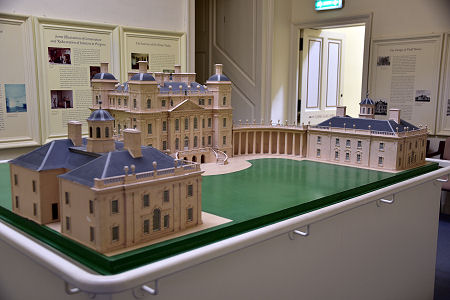 Model of Duff House as Originally Designed |
|
|
|
Visitor Informationwww.historicenvironment.scotHES: House Web Page View Location on Map Post Code: AB45 3SX Grid Ref: NJ 691 633 What3Words Location: ///slid.turns.notch |
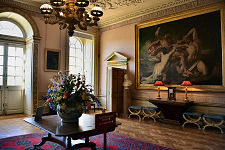 The Vestibule |
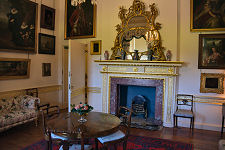 Countess Agnes' Boudooir |
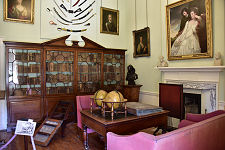 The Inner Library |
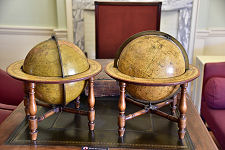 Globes in the Inner Library |
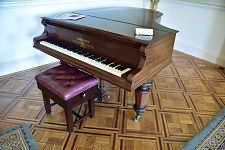 Piano in Great Drawing Room |
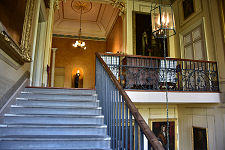 Great Staircase and Marble Lobby |
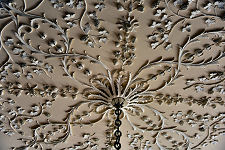 Decorated Ceiling |
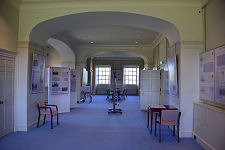 Long Gallery |
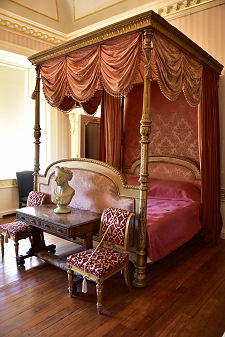 Prince of Wales' Bedroom |
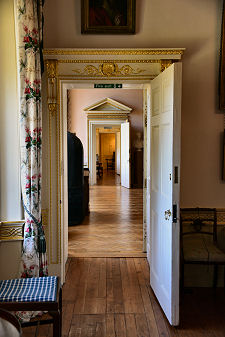 Line of Sight |
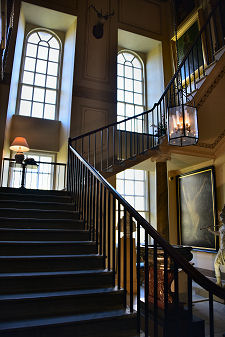 The Great Staircase |