 Low Street |
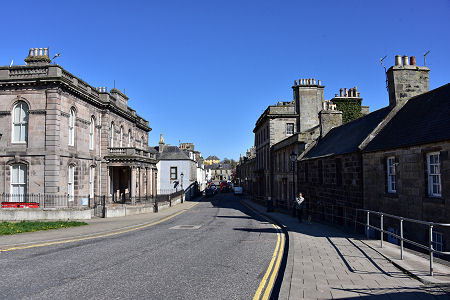
Banff stands on the north Aberdeenshire coast and was one of the most important ports in medieval Scotland. It was also the county town of Banffshire, one of the 34 traditional counties into which Scotland was divided for administrative purposes until 1975. These two factors explain the grand scale of many of the town's buildings.
Banff started life as a port on the west side of the mouth of the River Deveron in the 1100s, and a motte and bailey castle was built here by the Comyns, Earls of Buchan at the same time. There is evidence that King Malcolm IV stayed here for at least part of 1163. However, the town's harbour suffered from silting in the 1800s, leaving Macduff, on the east side of Banff Bay, to take up the role of principal commercial port along this stretch of coast.
Banff Castle was twice visited by King Edward I of England during his forays into Scotland. The castle was demolished in 1750, though traces still remain to the east of Castle Street. It was replaced by a mansion designed by the architect John Adam, which still stands and retains the name Banff Castle. (Continues below images...)
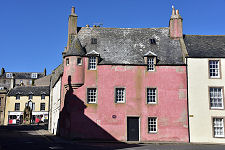
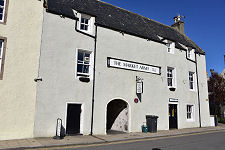
 Low Street and Strait Path |
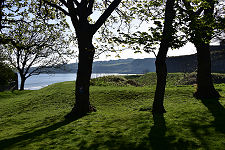
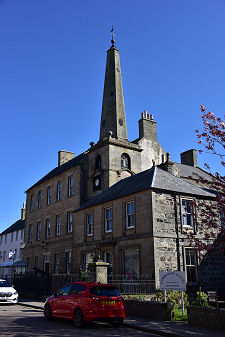
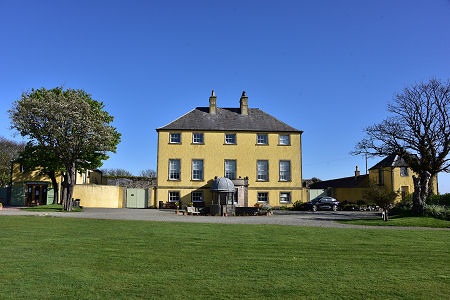 Banff Castle |
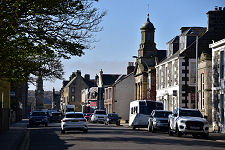
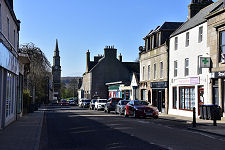
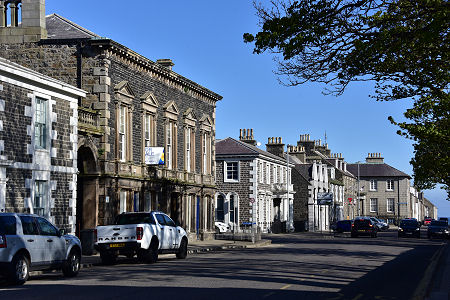 Castle Street |
Banff and Macduff don't quite merge. They are separated by the valley of the River Deveron. This unpredictable river was only finally tamed by the seven-arched bridge completed in 1799 by John Smeaton, whose other claims to fame included the Eddystone Lighthouse. An earlier bridge had been built here in 1765, but it was swept away in 1768. The old ferry the earlier bridge had replaced was brought back into use, until it was lost in a flood in 1773.
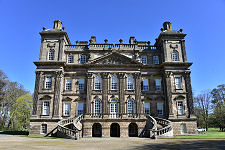
Within the Deveron Valley lies Duff House, designed by William Adam, built between 1735 and 1740, and widely thought to be one of Britain's finest Georgian houses. Duff House was built for William Duff, Lord Braco, who became the 1st Earl Fife in 1759.
The story of Duff House did not get off to a happy start. Disputes over its building reached such an intensity that William Braco never lived here. So acrimoniously did this end that it is said that he never even looked at the completed house, having his carriage blinds drawn whenever he passed by. Which, if true, is a shame, because he missed something well worth seeing.
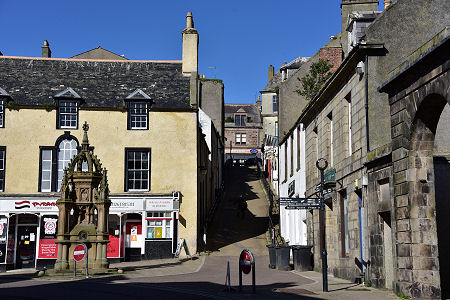
Banff itself contains a variety of fascinating architecture in a number of contrasting styles. Georgian architecture abounds, while down towards the harbour there are examples of more functional styles. Though no longer a commercial port, the harbour is still busy with leisure traffic. A fascinating glimpse of an earlier Banff can be found in St Mary's Kirkyard, which is home to the tombs of the people of Banff from the 1600s to the 1800s
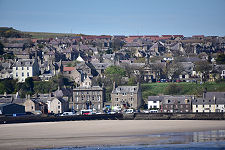
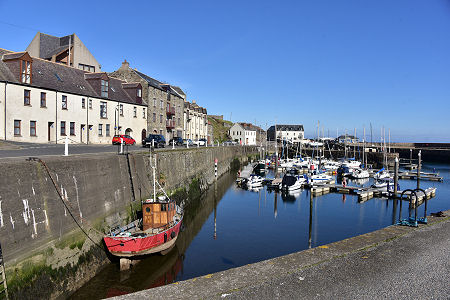 Banff Harbour |
|
|
|
Visitor InformationView Location on MapWhat3Words Location: ///marsh.creamed.melon |
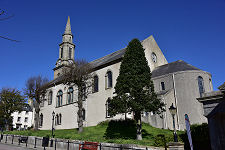 Banff Parish Church |
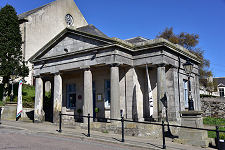 Old Tourist Office |
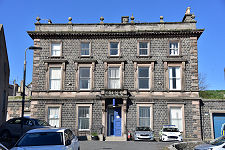 Police Station |
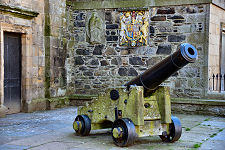 Town House Cannon |
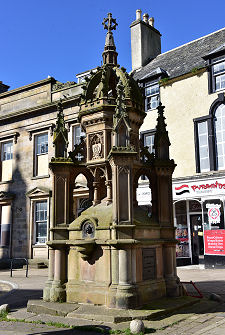 Biggar Memorial Fountain |
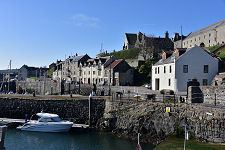 Banff Harbour |
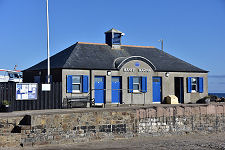 Marina Offices |
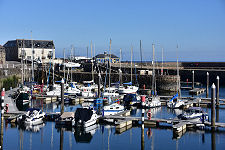 Another View of the Harbour |
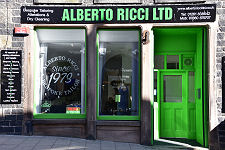 Albert Ricci Bespoke Tailoring |
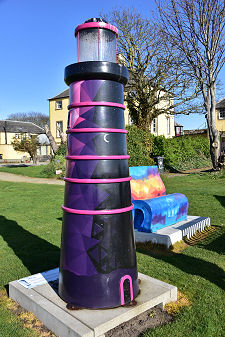 Banff Castle Grounds |