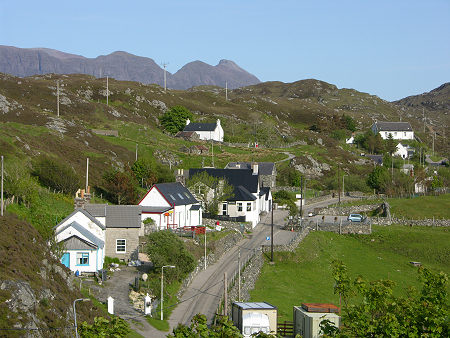
 Drumbeg with Quinag in the Background |
Drumbeg is reached via on the remarkably beautiful Assynt coastal road, the B869. This single track road provides a scenic link between Lochinver and Kylesku, and takes in some of Scotland's best scenery.
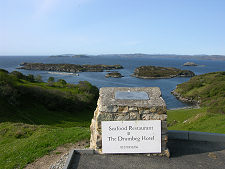
The village itself itself lies on the north facing coast of Assynt, looking out across Eddrachillis Bay to Handa Island and mainland Sutherland. A viewpoint with a car park has been constructed at the west end of village and from here you can take in the magnificent seascapes to the north.
And from the rocky mound opposite the viewpoint, you can gain some of the best available views of the village, along the main street and taking in the peaks of Quinag to the east.
Drumbeg's origins are vague, though the population of much of the Highlands was considerably larger than it is today prior to the clearances of the late 1700s and early 1800s. Like most of Scotland's west coast communities, it would have relied on the sea for much of its living and for its transport links. It was not until the end of the 1800s that a road reached here from Lochinver, en route to the ferry at Kylesku. (Continues below image...)
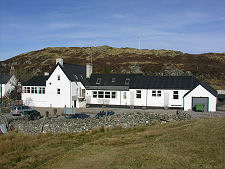
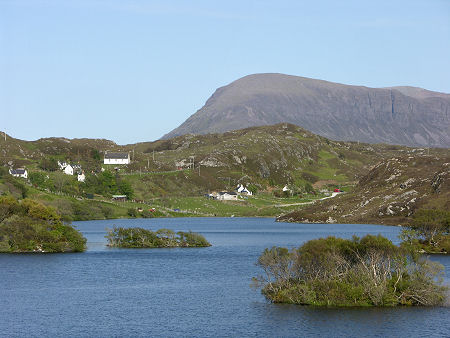 Drumbeg from the West |
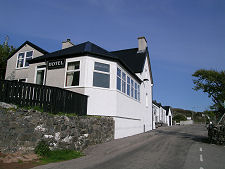
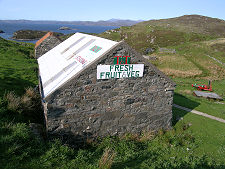
With a population of just over 100, Drumbeg is larger than it at first appears. There has been a village stores in Drumbeg for over a century. It is located in the centre of the village, not far from the Drumbeg viewpoint. It is a well stocked licenced grocer and delicatessen specialising in Scottish produce and also stocks local arts and crafts, books, maps and guides and provides light snacks. The village is also home to the Drumbeg Hotel.
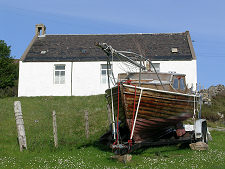
Drumbeg itself has no harbour. However, a side road leading north from a junction on the B869 half a mile west of the village takes you the short distance to Culkein Drumbeg. This is an attractive hillside settlement where a jetty was built at the end of the 1800s in an effort to bring prosperity to the area.
Most vessels preferred the shelter afforded by nearby Loch Nedd, so Culkein Drumbeg never took off as a fishing port. Today the jetty is closed for safety reasons and much of it has been removed, but the bay here remains home to a number of small craft.
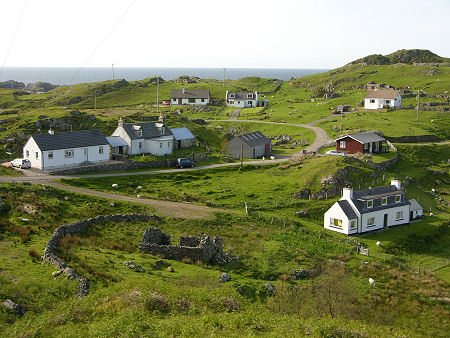 Culkein Drumbeg |
|
|
|
Visitor InformationView Location on MapWhat3Words Location: ///ruby.lighters.narrates |
Drumbeg In Fiction
|
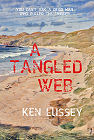 A Tangled Web by Ken Lussey (15 November 2023).
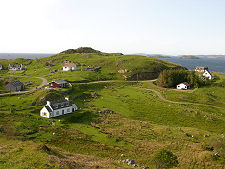 Culkein Drumbeg |
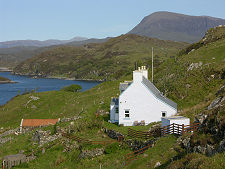 Cottage at Culkein Drumbeg |
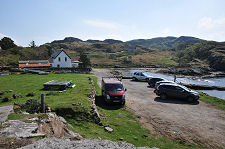 Old Harbour at Culkein Drumbeg |
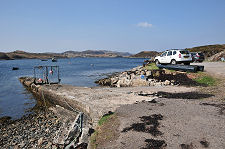 Old Pier at Culkein Drumbeg |
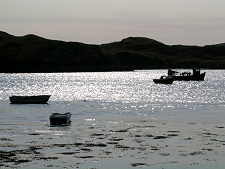 Boats at Culkein Drumbeg |