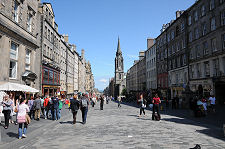
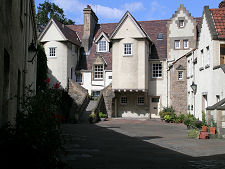
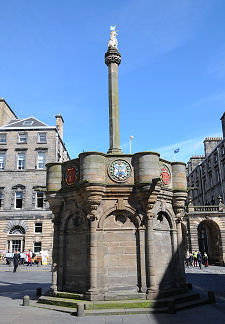
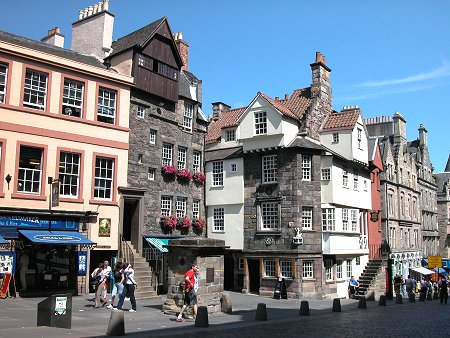
 High Street Section of the Royal Mile and John Knox's House |
Edinburgh is one of the most distinctive and widely recognised cities in the world. Even people who have never been anywhere near Scotland will have formed impressions of the city based on a range of sometimes clichéd but usually attractive and positive images.
The great thing about Edinburgh is that the reality surpasses your expectations. Two things usually come as a surprise to first time visitors. The first is that this is a city in three dimensions. It is built on and around hills, and the way Edinburgh grew leads to surprising changes in level at every turn. The second is the compact nature of the city. The centre of Edinburgh is small enough to be explored on foot, which is by far the best way to get to know it.
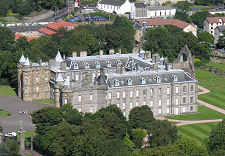
Edinburgh is built around, and defined by, the (almost) east-west axis of the Royal Mile. This is the main street variously called Castle Hill, Lawnmarket, High Street and Canongate that extends from Edinburgh Castle in the west to the Scottish Parliament Building and the Palace of Holyroodhouse in the east. (Continues below image...)
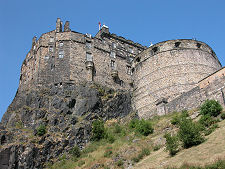
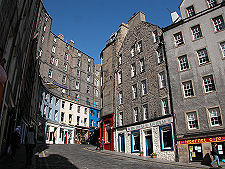
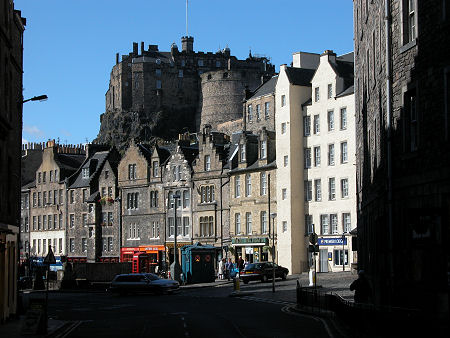 Edinburgh Castle and Grassmarket |
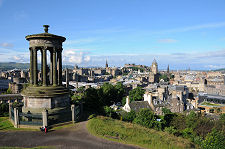
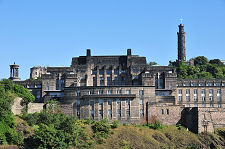
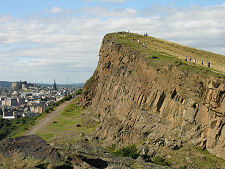
In doing so it links the two landmarks that make Edinburgh a more difficult city in which to get lost than just about any other. Extending south from the Palace of Holyroodhouse is Holyrood Park, complete with the volcanic Arthur's Seat and the impressive Salisbury Crags. At the west end of the Royal Mile, Edinburgh Castle sits atop the dramatic castle rock. Wherever you are in Edinburgh you can usually see either the castle or Arthur's Seat, or more usually both.
Edinburgh's origins were as "Din Eidyn", the capital of a people known to the Romans as the Votadini, and as the Gododdin to the Angles who defeated them in AD638 before anglicising the name to "Edinburgh".
For more than a thousand years the city grew around the line of the upper parts of the Royal Mile. This resulted in the world's first high rise buildings, and, at the time, its highest population density. This remarkably dynamic and intermixed society led to the intellectual revolution now known as the Scottish Enlightenment, but also to a city environment best described by its nickname at the time: "Auld Reekie". Robert Louis Stevenson's 1897 observations on the city in Edinburgh: Picturesque Notes make fascinating reading.
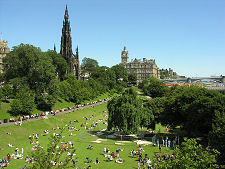
In the 1760s, dissatisfaction with the conditions in the Old Town led to the construction of a huge extension of the city to the north, planned to a grid pattern by James Craig. The Nor' Loch below the Castle was drained and replaced with Princes Street Gardens, while beyond it the major thoroughfares of Princes Street, George Street and Queens Street formed the core of the Georgian New Town to which the middle and upper classes moved en masse from the Old Town. The Georgian House gives an impression of the interior of a New Town house when first built.
The Old and New Towns remain distinct and separate, giving visitors to Edinburgh two cities for the price of one. The Old Town is home to many of the historical attractions like the castle and palace. The Royal Mile is also home to the National War Museum (within the castle), The Scotch Whisky Experience, Edinburgh's Camera Obscura and World of Illusions, Gladstone's Land, St Giles' Cathedral, John Knox's House, the Museum of Childhood, the Museum of Edinburgh, The People's Story Museum, Canongate Kirk, and to a range of fascinating pubs, cafes and shops. Nearby is the Writer's Museum. Close to Waverley Station are the excellent Fruitmarket Gallery and Old St Paul's Church.
At the foot of the Royal Mile is the new Scottish Parliament Building, while nearby, overlooked by Salisbury Crags, is the excellent Our Dynamic Earth. South of the High Street is the university quarter complete with the National Museum of Scotland.
In the New Town you find many of Edinburgh's best known shops, chiefly along Princes Street (complete with St John's Church and the nearby St Cuthbert's Church) and George Street. The main railway station, Waverley, lies in the dip between New Town and Old. North west of the centre are the old villages of Dean Village and Stockbridge, both on the Water of Leith. Near the latter is the Royal Botanic Garden, an oasis of tranquility in the city, while to the west is Edinburgh Zoo.
And each summer Edinburgh is home to the world's largest and most varied arts festival, the Edinburgh Festival. There are actually many different festivals: the International Festival, the Jazz and Blues Festival, the International Book Festival, the Fringe, the Edinburgh Mela Festival, the International Film Festival, the Edinburgh Foodies Festival and the Edinburgh Military Tattoo.
The busiest period starts in late July and extends through August. This is a great time to visit Edinburgh, but you need to have your accommodation booked well in advance. And if you are coming to see the city in its own right, you might be well advised to pick another time of year. Amongst the many hotels in the city centre are The Bruntsfield, The George Hotel, The Carlton, Prestonfield, Hotel du Vin, The Bonham and the Apex Waterloo Place. Another style of accommodation is offered by The Knight Residence and Braid Apartments by Mansley, both offering serviced apartments. Central Edinburgh offers many very good restaurants, including Zest Restaurant.
Part of what gives Edinburgh such a distinctive atmosphere is its large student population. It is home to no fewer than four universities: the University of Edinburgh, Heriot-Watt University, Napier University and Queen Margaret University; plus a thriving art college in the Edinburgh College of Art, now part of the University of Edinburgh.
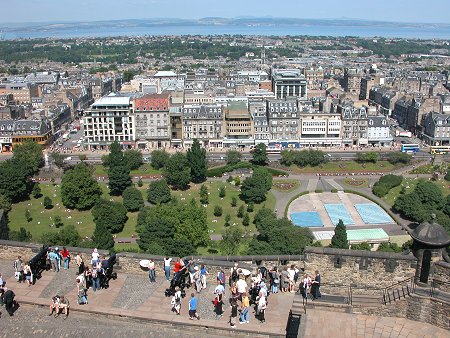 Princes Street and the New Town from the Ramparts of Edinburgh Castle |
|
|
|
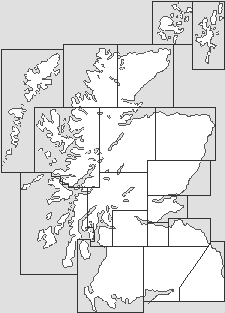
Visitor InformationView Location on MapWhat3Words Location: ///sheets.camera.film |
|
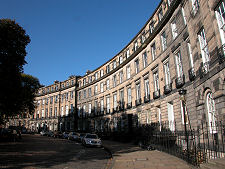 Part of Edinburgh's New Town |
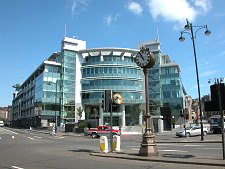 Tollcross |
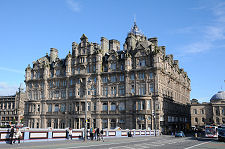 Balmoral Hotel |
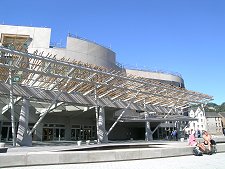 Scottish Parliament Building |
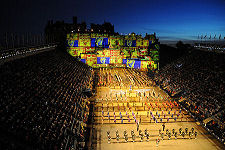 The Military Tattoo |
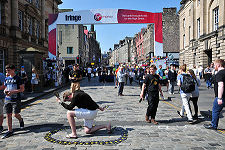 The Fringe Festival |
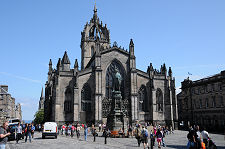 St Giles' Cathedral |
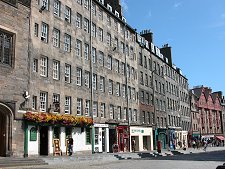 Lawnmarket |
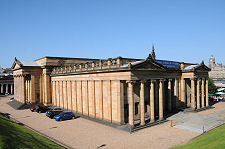 National Gallery of Scotland |
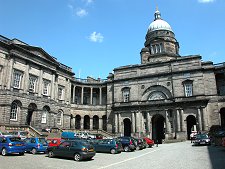 Old College, University of Edinburgh |
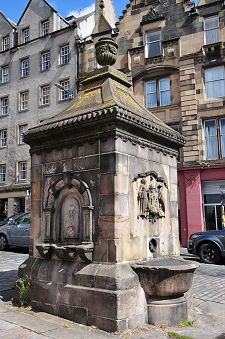 The Bow Well |