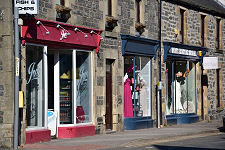
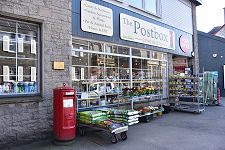
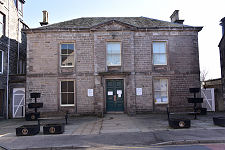
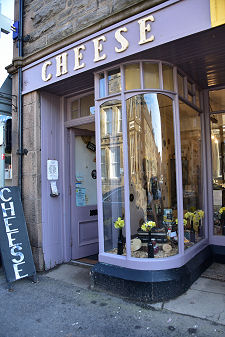
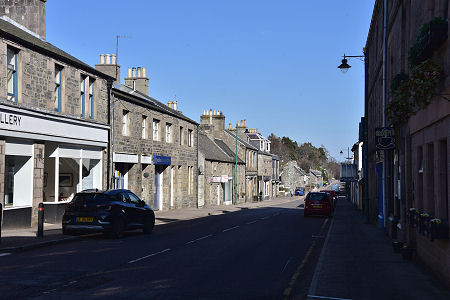
 Kingussie High Street |
Kingussie is a small town standing on the north side of the River Spey. Since 1979 it has been bypassed by the main road north, the A9, which runs to the south and east of it.
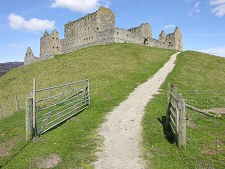
For many centuries, the focus of settlement in this part of the Spey Valley was on the south side of the river, at Ruthven. A castle existed here from 1229 on the mound now occupied by the remains of Ruthven Barracks. By 1371 Ruthven Castle was home to Alexander Stewart, Lord of Badenoch, and younger son of Robert II. "The Wolf of Badenoch" is best known for destroying Elgin Cathedral, and much of Elgin in 1390. He had been excommunicated by the Bishop of Elgin for marital infidelity: this was his response.
Ruthven Barracks was completed in 1721 on the site of the earlier castle, but reduced to its current state by Jacobites retreating from Culloden in 1746. The military road contemporary with the barracks crossed the Spey at a ford near the Kirk of Kingussie, though at the time there was no village here, just a few cottages gathered around the church. (Continues below images...)
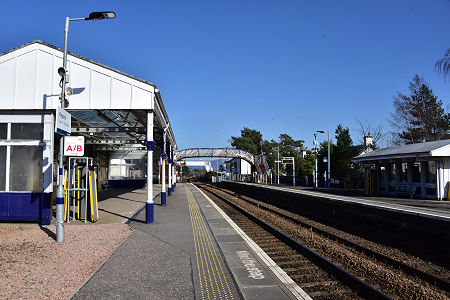 Kingussie Railway Station |
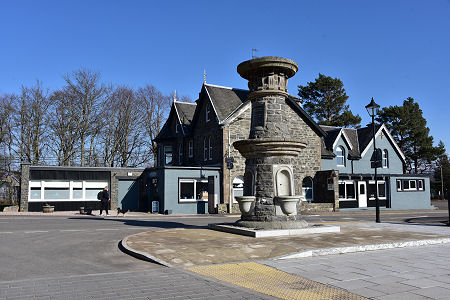 MacKenzie Fountain and The Crossing |
This all changed in 1799. The Duke of Gordon decided that the parish needed a village, and the planned settlement of Kingussie was laid out. It grew only slowly at first, but was given a boost when the River Spey and River Laggan were bridged in 1808 and 1815, placing Kingussie on the new or improved main roads from Inverness to Perth and to Fort William. Another boost was given by the resettlement of tenants cleared from their lands in surrounding areas to make room for sheep.
Kingussie had grown significantly by the time the railway arrived in 1863, prompting its transformation into a Highland resort. The imposing railway station lies just to the south of the centre of the village.
Golf came to Kingussie with the launch of an 18 hole course in 1890. The moorland course lies to the north of Kingussie around the valley of the River Gynack. Continuing the sporting theme, Kingussie is also well known for its links with shinty. The governing body for the sport was formed here, and the village's shinty team has enjoyed considerable success over many years.
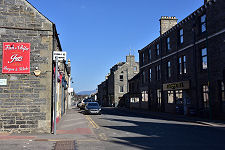
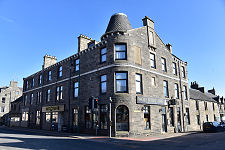
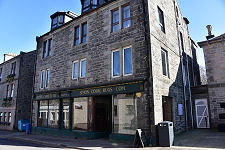
Today's Kingussie reflects its history, being well laid out to a regular pattern and especially rich in fine stone villas and other buildings. Particularly striking in the centre of the village is the Duke of Gordon Hotel. This was built in 1906, though the much more modern looking building you see today has been considerably expanded following a fire in 1999. A range of other hotels, guest houses, B&Bs and other accommodation providers can also be found in the village.
Kingussie has strong links with Scotland's national industry: distilling. A large distillery called "Speyside" was built here in 1895, though it went out of business in 1910. In 1991 the Speyside Distillery Company, named in recognition of the earlier distillery, started production in the newly built Speyside Distillery at Invertromie near Drumguish on the south bank of the River Spey a couple of miles east of Kingussie.
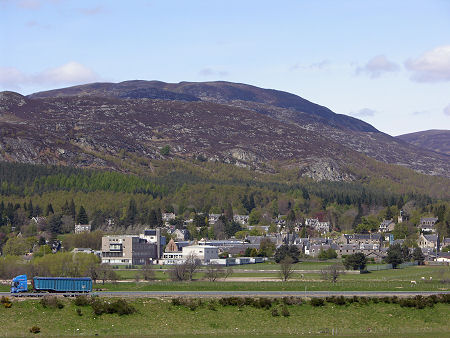 Kingussie Seen from Ruthven Barracks |
|
|
|
Visitor InformationView Location on MapWhat3Words Location: ///await.router.asterisk |
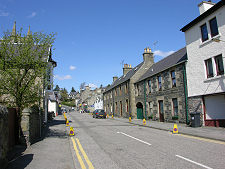 King Street |
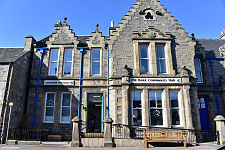 Old Bank Community Hub |
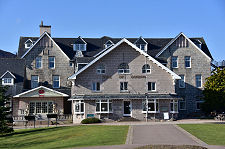 Duke of Gordon Hotel |
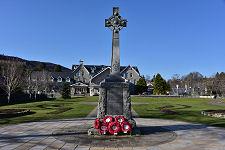 War Memorial |
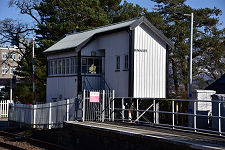 Railway Signal Box |
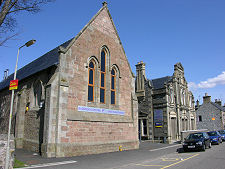 The Badenoch Centre |
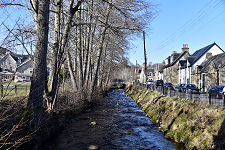 Gynack Burn |
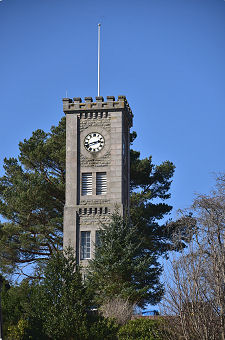 Kingussie Clock Tower |
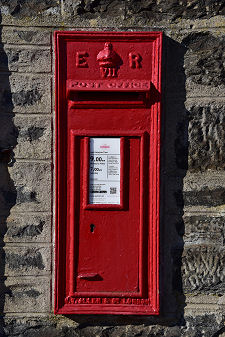 Edward VII Post Box |