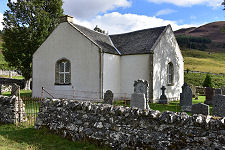
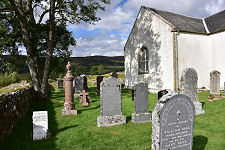
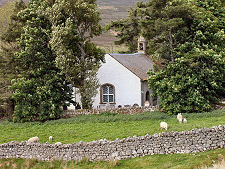
 Croick Church from the East |
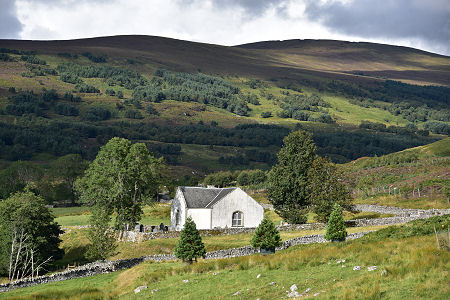
West of Ardgay in Sutherland, single track roads run for ten miles along Strathcarron into the foothills of the high mountains of the (largely treeless) Glencalvie and Freevater forests. The public road ends at the tiny scattered settlement of Croick, a mere 18 miles in a straight line from the west coast at the head of Loch Broom. Here you find Croick Church.
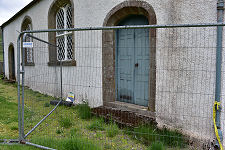
After a period of great uncertainty over the future of the church, ownership was transferred to Historic Churches Scotland in April 2025 and work then began to reverse years of structural decline and make the building weathertight and safe. This is only the beginning of a comprehensive project to repair and conserve the whole building. Many of the photographs on this page were taken during an open day for the local community held by Historic Churches Scotland at the end of August 2025. By that time a great deal had already been achieved. In particular, the Heras fencing that had surrounded the west end of the building on our previous visit in June 2023 had gone. It had been there mainly because the bellcote at the top of the west gable was teetering on the brink of collapse. The bellcote has since been taken down for display in the church pending a more permanent solution, hopefully involving its re-erection. Other photographs on this page, especially of the windows, were taken on earlier visits.
Croick Church owes its origins to the 1823 Parliamentary Act for Building Additional Places of Worship in the Highlands and Islands of Scotland. This voted the sum of £50,000 to build 32 churches and accompanying manses to standardised designs produced by Thomas Telford. Croick Church was built during the years 1825-1827.
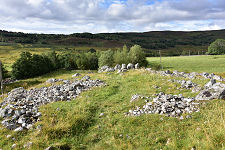
As surviving Parliamentary Churches go, Croick is notable in being exceptionally well preserved. Enter the church today and what you see is pretty much what Thomas Telford had in mind when he turned to his drawing board. Croick Church was built to serve some 200 parishioners living at the time within walking distance in the surrounding glens. The site chosen was adjacent to that of an Iron Age broch, immediately to the west: and looking at what's left of the broch today, it's easy to imagine that some of it was recycled into the structure of the church. (Continues below images...)
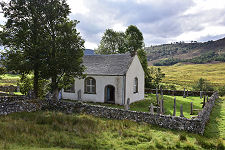
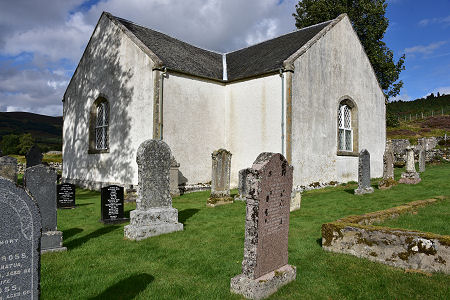 The Church from the South-East |
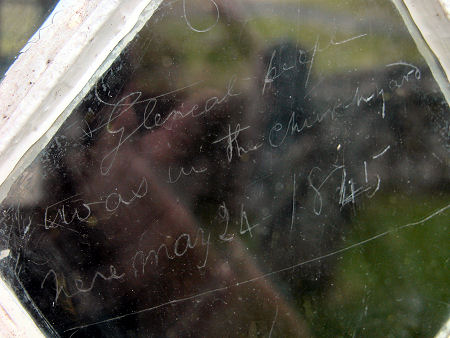 "Glencalvie people was in the churchyard here May 24 1845" |
In 1843 there was a schism in the Church of Scotland. As a result, according to a correspondent writing in The Times on 2 June 1845, the congregation in the established church immediately shrank to no more than ten. Most of the people the church was built for became part of the Free Church and took to gathering on Sundays in the open air.
But the correspondent of The Times was not in Strathcarron to report on the state of the Church of Scotland. He was there to blow the whistle on a scandal that had been sweeping across the Highlands and Islands for decades. The clearances were passed off by many at the time (and some since) as simple agricultural improvements. What clearance meant for many of the individuals involved was eviction from land their families had farmed for centuries and removal from the only world they had ever known. More widely it meant the utter destruction of a way of life and the culture that went with it. And all so the landlords' income could be increased by letting their cleared lands out to sheep farmers.
The Times article on 2 June 1845 was a watershed. It related in detail how some 80 people who had been cleared from Glen Calvie, to the south of Croick, had found refuge in a common shelter made from poles and tarpaulins in Croick churchyard. The publicity raised by the article helped spread knowledge of the clearances, but it came too late for most who had once lived in the Highlands, and it certainly came too late for those cleared from Glen Calvie.
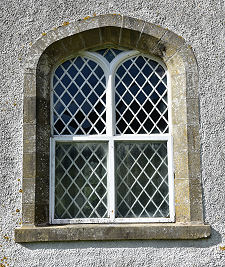
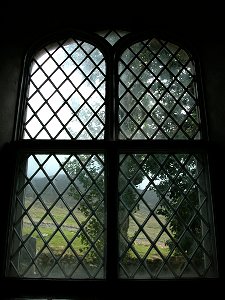
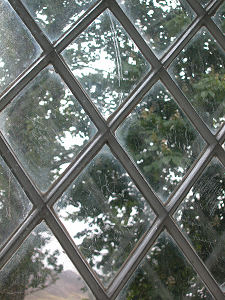
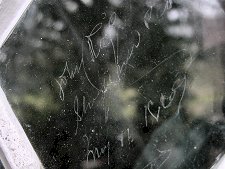
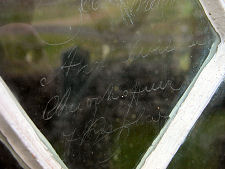
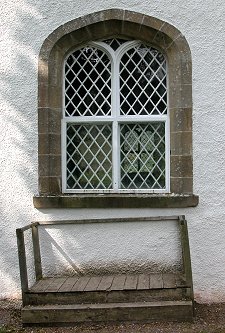
No one knows what became of the 80 refugees living in the churchyard in May 1845, but they are believed by many to have left their mark before they departed. The east window of Croick Church carries 22 short messages inscribed on the outside of its diamond-shaped panes. These include: "Glencalvie people was in the churchyard here May 24 1845" and "The Glencalvie tenants resided here May 24 1845" and, perhaps most poignantly, "Glencalvie People the wicked generation Glencalvie".
The atmosphere created by this tangible link with the past is remarkable, but there are anomalies arising from the messages that we've never seen fully resolved. The most obvious is that they are in copperplate handwriting and in English. Various suggestions have been offered as to why English might have been used, but none seem to square with The Times correspondent's description in his 2 June 1845 article of his inability to communicate with the the 80 refugees living here because they spoke only Gaelic.
It's also odd that the inscribed messages on the windows cover not only the events of 1845, but also make reference to 1854, 1869 and 1870. We've not been able to find any record of the first known appearance of the Glencalvie inscriptions on the windows, but their distribution amongst the panes carrying apparently later graffiti does raise unresolved questions.
And, finally, it's been suggested that the refugees chose to shelter in the churchyard rather than in the church itself because sheltering in the church would have seemed to them to be a desecration of it. And yet those same people are supposed to have scratched messages on the church windows. That, too, seems odd.
None of these questions about the origin of the inscriptions should take away from the enormity of what happened during the clearances, nor from the suffering of the 80 people whose plight was reported by The Times correspondent. But until some of the loose ends about the inscriptions can be tied up there has to be some doubt about whether they were really made by the people The Times correspondent met in May 1845.
Perhaps the brighter future for the church following its change of ownership will allow the space and time for the origin of the inscriptions to be more thoroughly researched as well as making them more easily visible. For a long time, there was a wooden platform ouside the east window which allowed a reasonable view of many of the inscriptions. This had gone when we visited in June 2023, and trees had been cut down in the churchyard, increasing reflected light from the sky on the outside of the east window and making the inscriptions much harder to see. Historic Churches Scotland is considering ways of properly conserving the windows to ensure that the inscriptions and the historical mystery they represent remain visible in the future and this is very welcome.
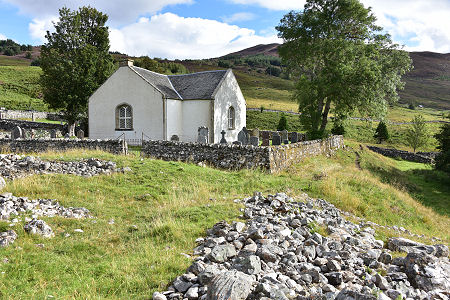 Croick Church Seen from the Remains of the Broch |
|
|
|
Visitor InformationHistoric Churches ScotlandView Location on Map Grid Ref: NH 456 914 What3Words Location: ///geology.launched.perch |
Croick Church In Fiction
|
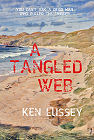 A Tangled Web by Ken Lussey (15 November 2023).
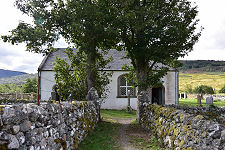 The Path to the Church |
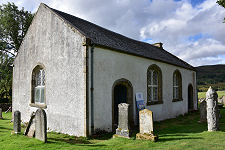 North Side of the Church |
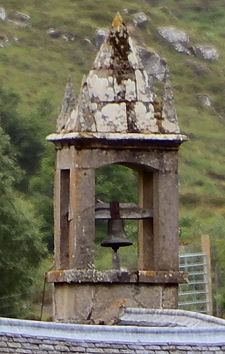 The Bellcote in 2023 |
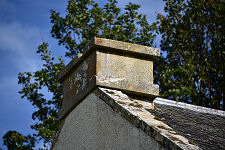 The Bellcote Plinth, 2025 |
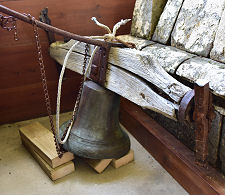 The Bell in 2025 |
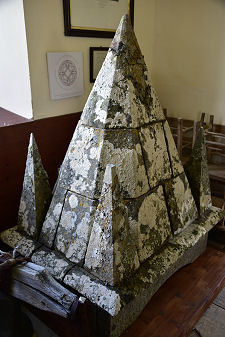 Top of the Bellcote in 2025 |
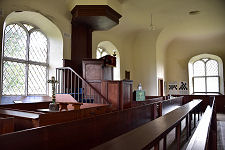 Interior from the South West |
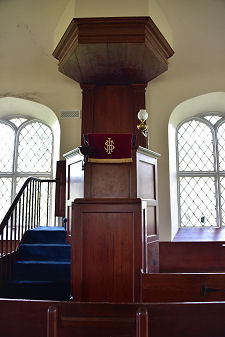 The Pulpit |
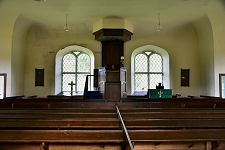 Interior, Looking North |
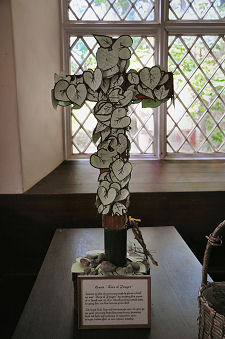 The Tree of Prayer |