 The Concorde Experience at the National Museum of Flight |
Regular travellers along the A1 through East Lothian will have seen signs pointing to the National Museum of Flight at East Fortune. Since the conversion of the A1 into a dual carriageway it has been necessary to turn off the A1 onto the A199 at Haddington or west of Dunbar to reach it. This is a slight detour well worth taking for anyone with an interest in aviation who is looking for a great day out.
The Museum of Flight is the Scottish National Aviation Museum, and part of National Museums Scotland. It occupies the hangars and a number of other buildings at East Fortune airfield. The museum originally opened its doors to the public on 7 July 1975 and has since gone from strength to strength, most recently following the restoration of two of its hangars, which in their rejuvenated state first opened their doors to the public over the 2016 Easter weekend.
The museum is home to a large and impressive collection of over 50 complete aircraft, plus many aero-engines, aircraft parts, models and a large reference library of publications and images. It also hosts a range of special events during the year and each July hosts Scotland's National Airshow.
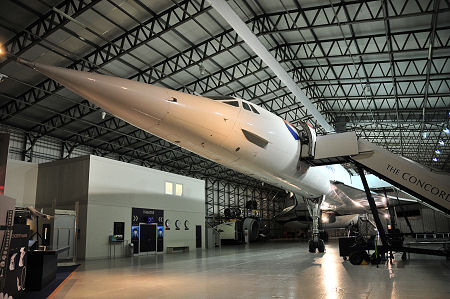
Most visitors begin their visit at the Concorde Experience and Jet Age Hangar. Much of the hangar is given over to the dramatically lit Concorde which made an epic journey from Heathrow to East Fortune by land and sea in 2004. A range of displays give an insight into all aspects of Concorde's development and operation, but for most people it is the aircraft itself which commands attention.
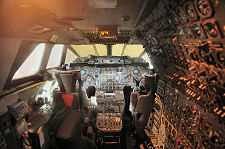
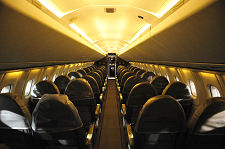
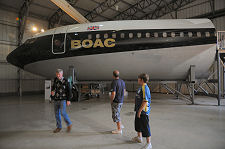
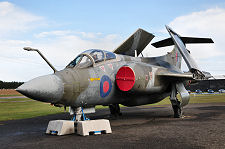
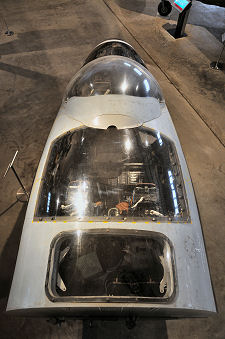
And it's not just the outside of the world's most amazing aeroplane you can admire. Visitors can explore the remarkably long and even more remarkably narrow interior of the passenger cabin, and view the cockpit. The Jet Age Hangar is also home to the restored cockpit and cabin of Boeing 707 airliner, G-APFJ, the nearby cockpit of a Hawker Siddley Trident, and a number of other exhibits. In the shadow of Concorde is one of the museum's most recent acquisitions, BAE Systems Hawk T.1A, registration number XX308, which flew with the Royal Air Force Aerobatic Team, the Red Arrows. (Continues below image...)
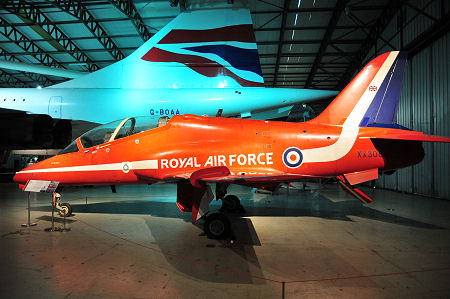 Red Arrow XX308 in the Concorde Hangar |
The Museum of Flight has three other large hangars at East Fortune. Furthest from the Concorde Experience is Hangar 1, which serves as a conservation hangar and is not open to visitors. Nearby is the museum's Education Centre, while an Avro Vulcan and a De Havilland Comet are parked not far away.
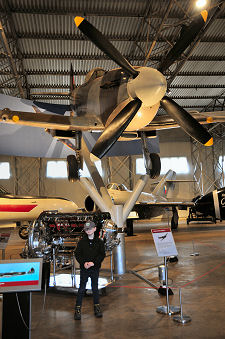
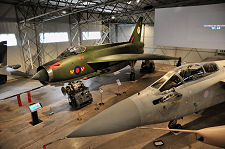
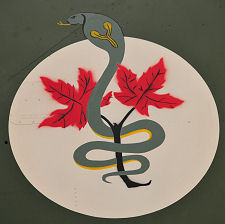
The restored Hangar 2 now serves as the museum's Military Aviation Hangar. The most obvious resident is Supermarine Spitfire Mark XVI, TE462, built at the end of World War Two. This is impressively displayed so it appears to be swooping down on arriving visitors. Our own favourite resident, in a rear corner of the hangar, is an English Electric Lightning F2A used by 92 Squadron at RAF Gutersloh in Germany in the 1970s. But you will also find other post-war aircraft here including the Meteor, Harrier, Jaguar and Tornado F3, and a naval Sea Hawk.
Earlier aircraft on display in the hangar include a Messerschmidt Me163 Komet rocket plane which could briefly achieve speeds of 600mph and was the fastest aircraft of World War Two and a magnificently restored and extremely rare Bristol Bolingbroke, also of WW2 vintage. Perhaps the best way to get a feel for the the hanger and the aircraft that reside within it is from the raised viewing platform which occupies the centre of the hangar (and is accessible by lift for the less mobile among us).
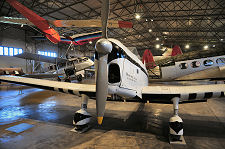
The restored Hangar 3 is the museum's Civil Aviation Hangar, and again it is home to a beautifully displayed collection of aircraft and other items. Aircraft on display include classics like a Scottish Aviation Twin Pioneer and a De Havilland Dove. An earlier generation of aircraft is represented by a De Havilland Dragon, a type which first flew in 1932. Another once very common type that is now extremely rare is the Avro Anson. Here, too, you can find a fire engine that once served at Barra Airport in the Western Isles, close to a livid yellow Britten-Norman Islander that served as an air ambulance. A wide range of smaller aircraft are also on display, including gliders and hang-gliders, several of which are suspended from the roof.
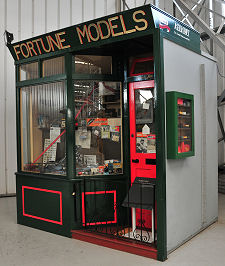
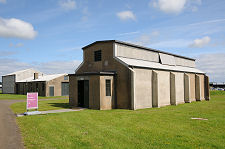
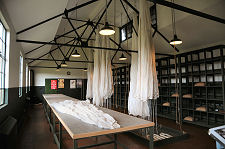
A number of the other buildings at East Fortune are home to displays or exhibits. The Parachute Store is housed in a building originally used for the purpose and shows how parachutes were hung, folded and stored.
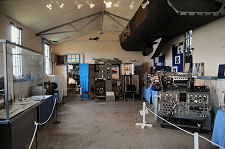
The Radar Room houses a collection that gives an insight into an aspect of aviation which is little understood by the casual enthusiast. Amongst the many objects on display are the innards of the hugely complex and (at the time) extremely advanced Airpass radar used by the Lightning jet fighter. Or you can see a demonstration of an early radar in operation, with the display on the cathode ray tube changing as you walk past. Another building is home to Fortunes of War, a superb exhibition which tells the story of East Fortune Airfield with objects and information panels, plus a large interactive map of the airfield showing its development and a fascinating audio-visual about life for those serving at RAF East Fortune.
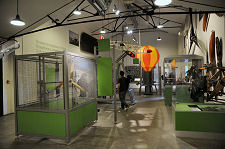
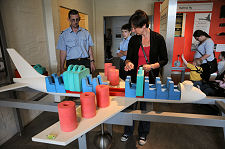
Best of all, in our view, is the "Fantastic Flight" building, which houses a series of rooms containing exhibits that allow visitors to have fun getting to grips with the principles underlying flight itself. The wide range of highly interactive exhibits include a hot air balloon that rises and falls; a wind tunnel with an aircraft that can be "flown" within it; a hands-on display of different materials used in aircraft construction; an aircraft which can be loaded to demonstrate centre of gravity; a test area for paper aeroplanes; and a flight simulator. Plus much, much more.
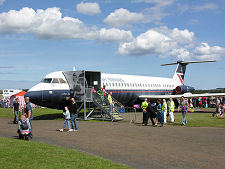
Meanwhile, two of the airliners parked on the site, the De Havilland Comet and the BAC 1-11, can also be explored by visitors. The Comet opened to visitors following an extensive period of restoration.
East Fortune itself has a history dating back to 1916, when it was used as a base by aircraft defending Edinburgh from attack by Zeppelins. In 1919 the airfield was the point of departure for the R34 airship as it set off on its record breaking return trip over the Atlantic. East Fortune served throughout WWII and in 1950 had a runway extended to allow it to become a base for the US Air Force. This came to nothing, but it did allow East Fortune to be used as Edinburgh's airport while the runway at Turnhouse was rebuilt in the summer of 1961. East Fortune was also home to a hospital between the wars and from 1949 to 1997. And last but not least it has spent the last four decades as the home of the National Museum of Flight.
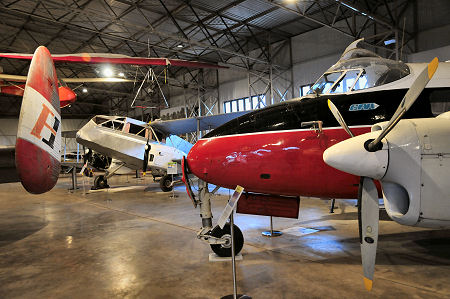 Inside the Civil Aviation Hangar |
|
|
|
Visitor InformationView Location on MapSTB 5 Star Museum. East Fortune Airfield, East Lothian, EH39 5LF. Tel: 0300 123 6789. Grid Ref: NT 553 784 National Museum of Flight Opening Hours Admission Accessibility What3Words Location: ///zips.dumps.ladders |
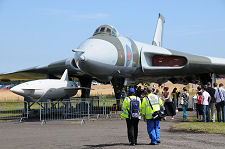 Vulcan XM597 at East Fortune |
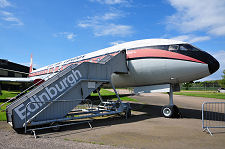 Comet 4c, G-BDIX |
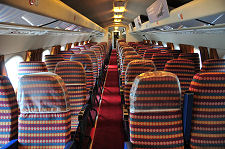 The Passenger Cabin of the Comet |
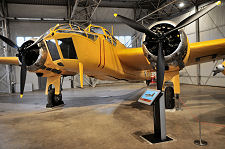 Bristol Bolingbroke in Military Hangar |
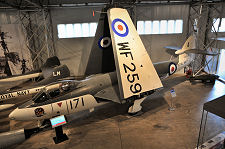 Hawker Sea Hawk |
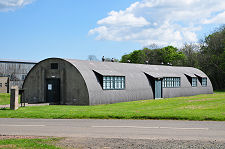 Fortunes of War Exterior |
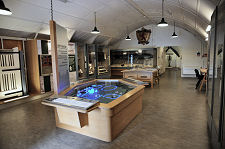 Fortunes of War |
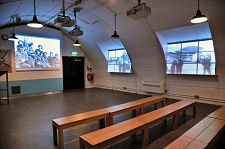 Life at East Fortune |
 Parachute Store with Fantastic Flight in the Background |
 The Parachute Store |
 Lightning F2A and Tornado F3 |
 92 Squadron Emblem on Lightning |
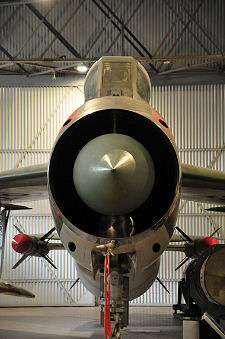 Lightning F2A, XN776 |