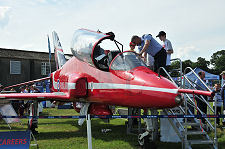
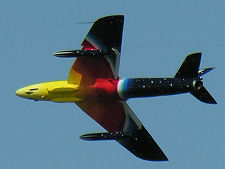
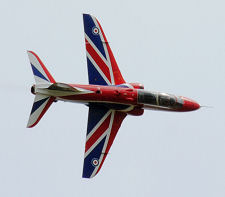
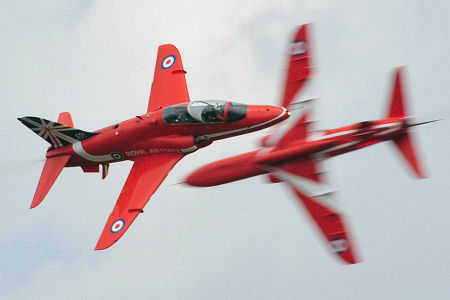
 The Synchro Pair of the Red Arrows Perform a Pass at the 2014 Airshow |
Scotland's National Airshow has not taken place since 2019 and in 2022 was "suspended for the foreseeable future". It seems unlikely to return. The remainder of this page is as it was before this announcement took place: but it is now of historical interest only.
Scotland's National Museum of Flight takes place at East Fortune in East Lothian, a historic military airfield 18 miles east of Edinburgh. On a Saturday in late July each year the museum is home to Scotland's National Airshow.
The pictures on this page were taken at the 2009-2014 airshows and reflect highly successful events that drew large crowds from across Scotland and beyond. With 13,500 visitors, the 2014 airshow was easily the most successful until then. Visitors to the airshow are able to enjoy a wide variety of attractions both in the air and on the ground. These include the full range of facilities of the museum itself, including access to all its display hangars and other exhibitions, plus the chance to view the interiors of some of the larger aircraft it keeps outdoors on the museum site. There is also, of course, the museum's Concorde Experience.
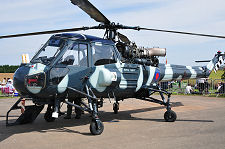
Meanwhile there is an impressive collection of other ground-based attractions on offer. These range from a funfair to military vehicles, and include static light aircraft and helicopters flown in to East Fortune for the event. Elsewhere you find trade stands and food and drink outlets, together with stands seeking recruits for the Air Training Corps or the RAF. There is also a rolling series of events taking place in a number of venues across the site.
There are several factors that combine to make the airshow at East Fortune rather different from other airshows you might have been to. The most obvious has already been mentioned: it is hosted by an aviation museum rather than by an active airfield or airport. The second is the nature of the museum site, which offers plenty of space and allows visitors wishing to view the air display to do so from just about any exterior part of the site. The large grassy areas mean that, on a nice day at least, you can choose to join the crowds near the fence on the side of the site nearest the flight line, or instead pick a less busy spot for a picnic or for your folding chairs and still see the flying display.
At East Fortune the displaying aircraft do so along the line of the old north-south runway, which is to the east of where the spectators are gathered on the museum site. With a flying display that extended for a number of hours during the afternoon, this means that on a bright day the sun is behind the spectators and lighting up the performing aircraft, which gives ideal conditions for watching and photographing the air display.
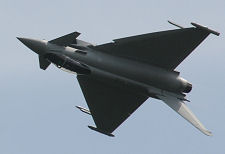
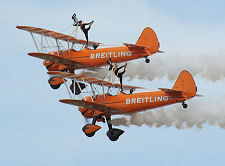
The flying displays are varied and entertaining, mixing skill and spectacle with daring flying and beautiful aeroplanes. Everyone's tastes are different, but the air displays always offer a highlight.
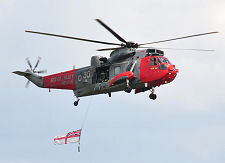
In 2014 this was without doubt the Royal Air Force Aerobatic Team, the Red Arrows, performing during their 50th display season. The ground team and Red 10, the commentator, arrived by helicopter first, and then the nine red Hawks flew in from behind the crowd, trailing their trademark red, white and blue smoke. The Red Arrows first flew as a team in May 1965. We've been watching them regularly since seeing their nine Folland Gnat aircraft make the entire staff of the control tower duck at a now long disused airbase in north Lincolnshire in the early 1970s as they flew in very, very low and very fast from behind the line of hangars. They swapped their Folland Gnats for British Aerospace Hawk aircraft in 1979 and have flown the Hawk ever since.
The attractions on the ground at the 2014 airshow included an area given over to historical re-enactment groups, many with old military vehicles; a community craft and culture marquee; a fairground; a family activity zone marquee; a food zone, and even a bar and hog roast; plus a variety of events in the Concorde hangar ranging from the Royal Air Force Presentation Team to contemporary folk music and the chance to talk to a Concorde pilot.
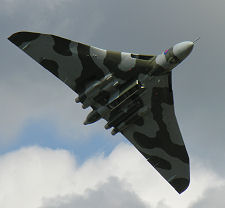
Other years' flying displays have had a variety of highlights. Perhaps the most memorable moment of any airshow at East Fortune came in 2009 with the arrival of Vulcan XH558. This aircraft retired from the RAF in 1993 and returned to the skies in late 2007 after years of restoration. How an aircraft designed 60 years ago can still look so futuristic is beyond us. And nothing in modern aviation can sound as magnificent as four Bristol Olympus engines on full power.
The 2009 display had one other, rather more subtle, highlight. To understand its significance, you need to know a little of the background. The flag of Scotland is the Saltire, a white diagonal cross on a blue background. There are variants of the story of the origin of the Saltire, but they only differ in relation to the year and the name of the king involved.
The most popular version is that in 832 a joint force of Picts and Scots under King Angus (or Óengus) of The Picts met a Northumbrian army under King Athelstan at a location in East Lothian. The night before the battle, St Andrew appeared in a dream and promised Angus the victory he had prayed for. The two armies met the following day at a place called Athelstaneford, just over two miles west of East Fortune. As they did so, a strange cloud formation appeared, forming a broad diagonal white cross against the background of bright blue sky. The Picts and Scots believed this to be an omen: and so did the Northumbrian Angles. The battle that followed was an improbable victory for the outnumbered Picts and Scots, and they subsequently adopted the Cross of St Andrew or the Saltire as their flag.
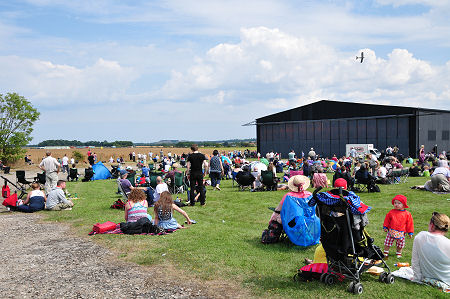 A Comfortable and Enjoyable Way to Watch an Air Display |
|
|
|
Visitor InformationView Location on MapScotland's National Airshow: "Suspended for the foreseeable future". National Museum of Flight, East Lothian, EH39 5LF. More Information Here What3Words Location: ///zips.dumps.ladders |
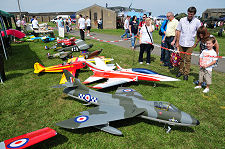 Model Aircraft Display |
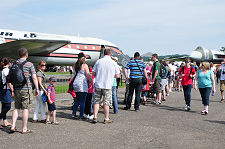 Boarding the Museum's Comet |
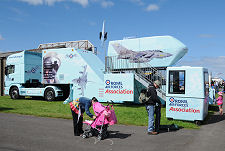 Aircraft Simulator |
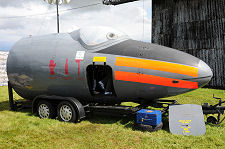 Dumfries Aviation Museum Canberra |
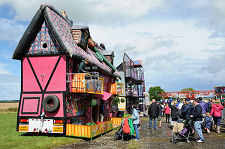 Part of the Fun Fair |
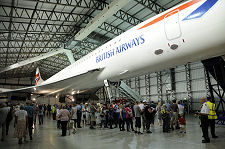 Inside Hangar 4 During the Airshow |
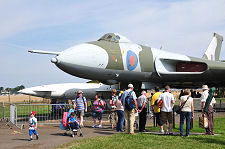 The Museum's Resident Vulcan |
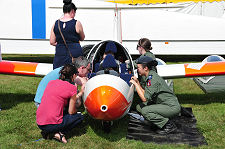 Air Training Corps Glider |
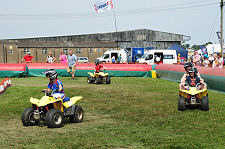 Quad Riding for Children |
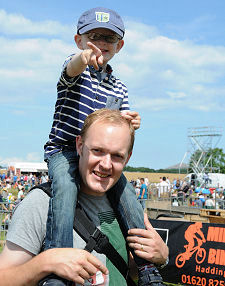 A Family Day Out |