 Brora |
Brora is an interesting mix of coastal resort and industrial town, having been home until the 1970s to Scotland's most northerly coal mine. It is perhaps best known for the quality of its whisky and the attractiveness of its small harbour.
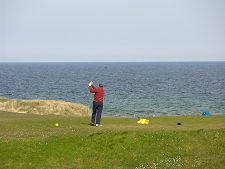
The best place from which to appreciate Brora as a resort is from near the Golf Club, overlooking the mouth of the River Brora from the north. North of here an attractive stretch of beach is backed by the golf course: whose northern end is in turn bounded by Brora's main caravan site.
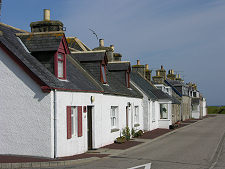
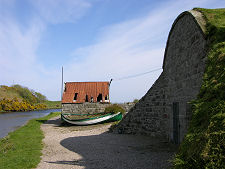
On the south side of the river is Brora's attractive small harbour. From here the coast curves around a slight headland on which you find two rows of white-painted cottages, once used by the fishermen who used the harbour, or the men working the salt pans that were long a feature of the area. South again are dunes and more beach, while the main village of Brora lies a little inland and raised above the shoreline. (Continues below image...)
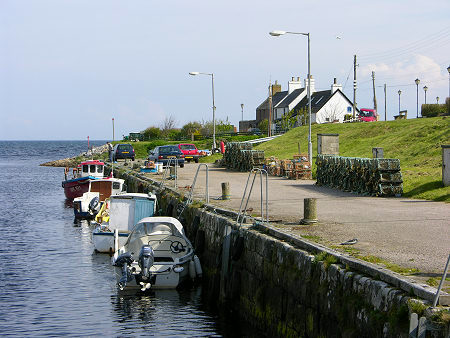 Brora Harbour |
For much of its history Brora was the industrial powerhouse of Sutherland. Coal was mined here as early as the 1500s. A larger scale colliery opened in 1810 but was closed in 1827 when funding ran out. It was revived in 1872 and used water powered pumps to allow mining to take place at depths of 100m or more. After an unusually long history, Brora's pit finally closed in 1974.
Brora's harbour also dates back five hundred years or more. Coal produced by the pit was moved by sea until ships were displaced by the railway on its arrival in Brora in the 1870s. The harbour was never really large enough to compete with other fishing ports along this coast that grew to take advantage of the herring boom in the early 1800s, but it was - and still is - home to some fishing vessels.
Salt was also exported from the harbour. Coal from the pit was burned under pans of sea water along the coast here, evaporating off the water and leaving the salt. At the height of the demand, in 1818, 400 tons of salt were produced annually in Brora, meeting most of the needs of the herring fleets along this coast.
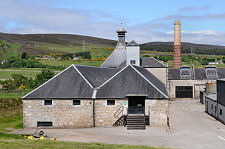
Brora has a history of textile manufacture, with Hunter's of Brora maintaining a long tradition in the town until it went out of business in 2003. Whisky production, which started in 1919, is alive and well however. Clynelish Distillery can be found a little west of the A9 as it heads north out of the town. The nearby old distillery it replaced in the 1960s became known as Brora Distillery. It was mothballed in 1983 but returned to production in 2021.
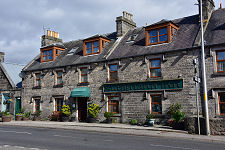
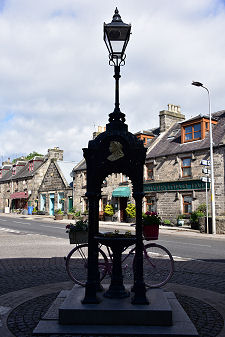
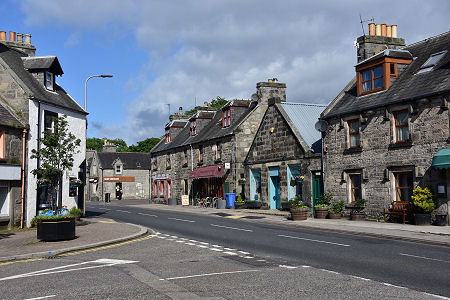
The centre of Brora is largely built of grey stone that in poor weather can make it seem rather, well, grey. But if you bother to explore a little, you find a village with as much charm as it has history.
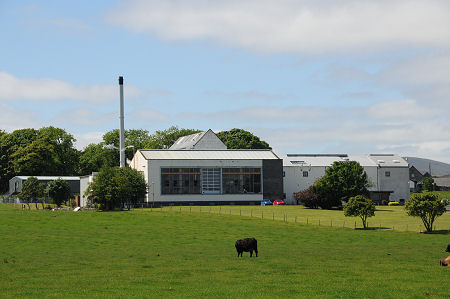 Clynelish Distillery from the North-East |
|
|
|
Visitor InformationView Location on MapWhat3Words Location: ///slope.investors.oils |
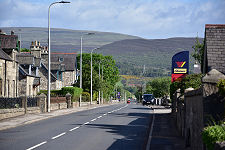
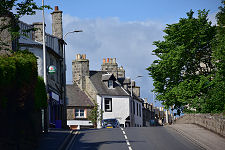 Approaching from the North |
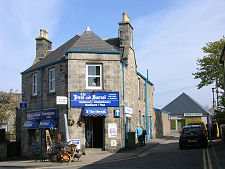 Newsagents |
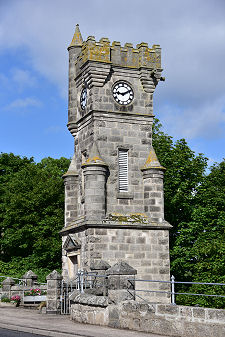 Memorial Clock Tower |
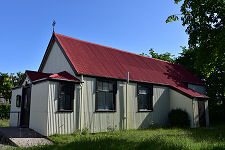 Tin Church |
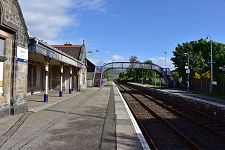 Railway Station |
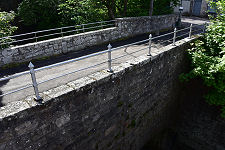 Bridge Over River Brora |
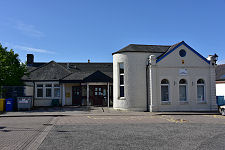 Health Centre |