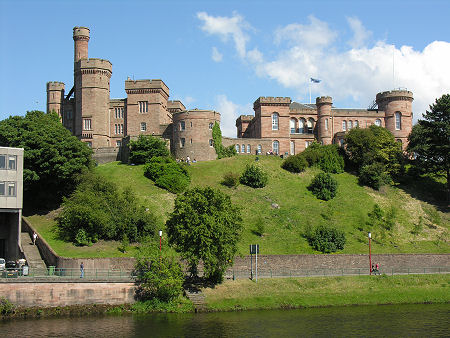
 Inverness Castle Seen Across the River Ness |
Inverness, Loch Ness & Cromarty Firth comprises the areas around Inverness and Nairn, the Black Isle and the area traditionally known as Easter Ross, and Loch Ness and the Great Glen as far south as Loch Oich and part of Loch Lochy. In the west it takes in Strathglass, Glen Cannich and Glen Affric. For accommodation in Inverness, Loch Ness & Cromarty Firth see the links in the "See and Stay" menu above. See the map below for an outline of the area and links to surrounding areas.
For the motorist, the city of Inverness is now bypassed by the A9 which sweeps past the east of the city on its way to the Kessock Bridge over the Beauly Firth. Nonetheless, Inverness remains the gateway to the north of Scotland.
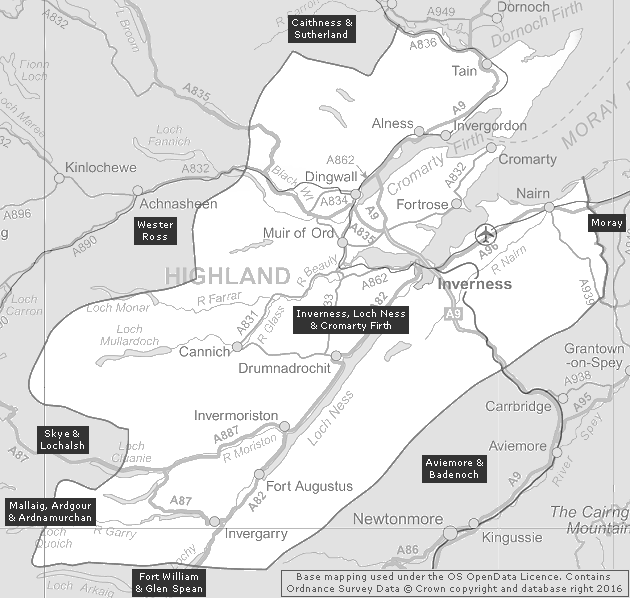 Inverness, Loch Ness & Cromarty Firth, Showing Main Settlements & Connecting Areas |
Inverness itself is set on the banks of the River Ness and retains parts of its medieval street network, though the town's role on the centre stage of much of Scotland's violent past means that few buildings of historical significance remain from its early history. Much of present day Inverness dates to the 1800s and the completion of the Caledonian Canal. A range of more modern architecture can also be found, especially where the city has extended to take in the southern shores of the Beauly Firth.
The Inverness Castle that now sits overlooking the River Ness is a 19th Century building used as the Sheriff Court. Inverness Castle now also serves as the official end (or start) point of the Great Glen Way, the 73 mile long distance path linking Inverness with Fort William.
The excellent Inverness Museum and Art Gallery is a must see attraction. Across the river and further upstream is the Eden Court Theatre. Nearby is Inverness Cathedral, part of the Scottish Episcopal Church. The River Ness dominates the city and has much to offer visitors. The comings and goings along the Caledonian Canal can be viewed from Tomnahurich Bridge beyond the Aquadome, where regular cruises depart on tours of Loch Ness.
Inverness lies within easy reach of most of the region's best-known attractions and is an ideal touring base. There is plenty of accommodation, good shopping, and in summer lavish floral displays make this an attractive place to stay. Three miles to the west of the city on the south shore of the Beauly Firth is the extremely charming Bunchrew House Hotel. Another fine country house hotel, this time to the east of Inverness, is Culloden House Hotel. Those looking for accommodation within the city should consider the stylish Rocpool Reserve. As an alternative to the traditional hotel, we can also highly recommend Highland Apartments by Mansley, right in the heart of the city.
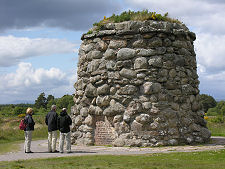
Culloden, itself offers an outstanding visitor centre and tours of the battlefield, now mostly cleared of its forest and looking more as it would have appeared during the last battle to be fought in mainland Great Britain; a battle that was the final, losing, throw of the dice for the Jacobites. Less well known but very close to Culloden are the Clava Cairns, a trio of burial cairns each with surrounding standing stones in beautiful wooded setting. Not far away is Inverness Airport and the Highland Aviation Museum.
Loch Ness is by far the best known of the lochs in the Great Glen, at least in part because it is the only one reputed to be home to a monster. Nessie is a creature which may or may not actually exist. Either way it has been exercising a fascination since 22 July 1933, when George Spicer and his wife, visitors from London, saw "a most extraordinary form of animal" cross the road in front of their car and enter Loch Ness. Other sightings were soon reported and the cult of the Loch Ness Monster quickly took off. It has since been suggested that the first reference to it in print was in the biography of St Columba, written in the late 600s.
The attractive village of Drumnadrochit is well worth exploring in its own right, and is home to the Loch Ness Centre, an excellent visitor attraction at which you can find out a great deal more about the story of Nessie.
Twelve miles west of Drumnadrochit the A831 is the remote village of Cannich. This is the gateway to a series of spectacular glens extending further west, including Glen Affric and Glen Cannich, in which the ten mile long Loch Mullardoch was created in 1952 as part of the wide ranging hydro-electric schemes across the Highlands. The road from Drumnadrochit to Cannich passes the attractive St Ninian's Church, and close to Corrimony Chambered Cairn.
A little south of Drumnadrochit is Urquhart Castle; built on the shores of the Loch Ness. It is one of Scotland's best known castles. Its history has been a bloody one, the castle having repeatedly changed hands over the centuries. Visitors are welcome all year round and the stunning views from the five storey tower house at the north end of the site and the excellent visitor centre make the journey worthwhile.
The attractive small settlement of Invermoriston lies on the west side of Loch Ness towards its southern end, and where the A887 towards Kyle of Lochalsh branches off the main A82.
Situated at the south-west end of Loch Ness, Fort Augustus is an attractive place. The staircase of five locks on the Caledonian Canal raise and lower boats by 40 feet as they pass through, and there is a large Benedictine Abbey, now converted for use as residential accommodation. Boat trips run from Fort Augustus offering cruises on the Loch. The Clansman Centre in the village offers an interesting slant on traditional Highland culture and visitors can be photographed in period costume.
2002 saw the launch of the Great Glen Way, a 73 mile, long distance footpath running the length of the area en route from Fort William to Inverness and taking in Fort Augustus, Invermoriston and Drumnadrochit.
Before departing Loch Ness it is worth noting that a "B" road runs alongside much of its eastern side, staying close to the loch between the village of Foyers and its northern end. This can be uses as a scenic alternative to the busy A82 running up the west side of the loch: though it is worth noting that much of this alternative is made up of single track roads.
South of Fort Augustus the A82 meets the A87 from the west at Invergarry, an attractive little village complete with the ruins of Invergarry Castle in the grounds of the Glengarry Castle Hotel.
In the far north-east of this area is Nairn, which lays claim to being one of the driest and sunniest places in the country. It became popular as a resort in Victorian times with the coming of the railway. Formerly a community of fishermen and farmers, Nairn has developed into a traditional seaside town, with its sandy East Beach and range of tourist facilities.
Fort George lies to the west of Nairn and looks directly across the Moray Firth to Fortrose. The huge site covers much of the headland and is a fascinating place to visit; here is a virtually unaltered 18th Century artillery fortification that cost more to build than Scotland's total Gross National Product for 1750 and was designed to ensure that, after the 1745 uprising, the Highlands were "pacified" once and for all (see our Historical Timeline).
East of Nairn is the village of Auldearn with its 17th Century Boath Doocot, or dovecote. Here you'll find a display about the Battle of Auldearn between Royalists and Covenanters which took place in 1645. A few miles to the south, the waters of Lochindorb surround the ruined thirteenth Lochindorb Castle. Cawdor Castle, wrongly associated thanks to Shakespeare with Macbeth, is to the south-east of Nairn and is open to visitors during the summer season. Nearby is the attractive estate village of Cawdor. In the remote upland area around the River Findhorn valley, south-east of Nairn, is the intriguing Ardclach Bell Tower. Eighteen miles south of Inverness and close to the A9 is the excellent Tomatin Distillery.
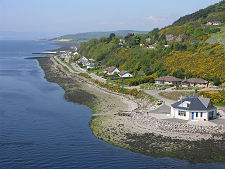
North of Inverness the main A9 crosses the Moray Firth via a spectacular bridge completed in 1982, before carving across the hillside behind the old ferry terminus of North Kessock across the Black Isle. This is actually a peninsula bounded by the Moray and Cromarty Firths rather than an island, which links to the rest of the mainland at Muir of Ord. The Black Isle is an area of rolling hills and fertile farmland, which enjoys a particularly mild climate.
Cromarty is a pretty town at the north-eastern end of the peninsula and the largest settlement on the Black Isle. Attractive 1700s houses line its streets and Cromarty Courthouse is home to a fine community run museum. Next door is the Hugh Miller's Birthplace Cottage & Museum. The Cromarty to Nigg ferry runs from here in Summer and lays claim to being the smallest car ferry in Scotland. Cromarty East Church is one of the finest examples of a Presbyterian Church in Scotland.
Follow the main road south-west from Cromarty and you cross the peninsula to arrive in Rosemarkie, an ancient village with a lot of charm. There are many prehistoric sites in the area and in the High Street is the Groam House Museum devoted to Pictish culture.
To the south of Rosemarkie is Chanonry Ness, leading to Chanonry Point. This is an excellent site for dolphin spotting and the terminus for a ferry across the Moray Firth for many centuries until it stopped operating in the 1950s. Here too you find one of the Stevenson family's many lighthouses.
The village of Fortrose lies west of Chanonry Point. Until the Reformation in 1560 this was an important ecclesiastical centre and it is still home to the ruins of Fortrose Cathedral dating from the 1200s. Within sight is the rather more recent St Andrew's Church.
Further west the main road takes you through the traditional fishing village of Avoch before skirting Munlochy, while close to the A9 you can visit the Black Isle Brewery. Just north of Munlochy is the rather odd Clootie Well. South of Munlochy on the Moray Firth and almost back in North Kessock is the tiny hamlet of Kilmuir.
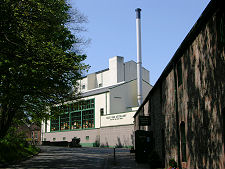
Muir of Ord grew around a large cattle market. Today it is popular with visitors coming to Glen Ord Distillery. Beauly is four miles south of Muir of Ord and ten miles west of Inverness, a picturesque town built largely of red sandstone. The ruins of Beauly Priory, founded in 1230, lie close to the centre of the town and are open to the public. Four miles east is Moniack Castle with its winery open to the public on weekdays. Sloe gin is made here and wines include elderflower and birch.
Strathpeffer developed as a spa town in the 1800s as a result of its waters, which became known for their healing powers. With its Victorian splendour and charming atmosphere, Strathpeffer is also a very good base from which to explore the wider area. There are a number of attractions in and around the town. The Old Railway Station is home to the excellent Highland Museum of Childhood, while nearby is the intriguing Eagle Stone. In the upper part of the town is St Anne's Church.
As you descend the five miles that separate Strathpeffer from Dingwall you move between two different worlds. Gone is the Victorian upland gentility. Instead Dingwall is a busy and businesslike town that knows that its role is to serve as the commercial centre of the area. Dingwall was also the birthplace of Macbeth, and lies at the head of the Cromarty Firth. This forms a superb, large and deep natural harbour with a narrow and easy to protect entrance. Today it provides safe anchorage for the repair and maintenance of oil rigs; during the First World War it was a major naval base.
On the north shore of the Cromarty Firth near Alness is Dalmore Distillery, whose visitor centre and distillery tours are well worth the slight diversion they involve from the A9. Another settlement bypassed by the modernisation of the A9 is nearby Evanton.
The oil industry has also made its presence felt along the northern side of the Cromarty Firth, and Invergordon and Nigg are just two of the settlements that have developed to service the industry. The visual impact in the Cromarty Firth is also significant, and the lines of moored oil rigs often strung out along it are a striking and unusual sight, oddly reminiscent of a film adaptation of H.G. Wells' "War of the Worlds". Despite appearances, Nigg is also home to a remarkable piece of history, in the shape of the Nigg Stone in Nigg Old Church.
West of Invergordon, not far from Nigg Bay, the coast road runs past Kilmuir Easter Church. Further around the bay, at Nigg, is the narrow mouth of the Cromarty Firth. Here you can catch the car ferry back to Cromarty.
The largest settlement on the south side of the Dornoch Firth is Tain, a Royal Burgh with a history which dates back to Viking times. St Duthus was born there in AD1000. During the Clearances, Tain was an important administrative centre. East of Tain, the shoreline passes through military ranges before curving round via the attractive village and harbour of Portmahomack to the north-pointing Tarbat Ness. On the edge of Portmahomack is the excellent Tarbat Discovery Centre. Travelling south along the Easter Ross Seaboard brings you to the ancient fishing villages around Balintore, while inland is Fearn Abbey. Overlooking the coast is the magnificent Shandwick Stone, a 2.7m high Pictish cross slab.
A short distance north-west of Tain lies Glenmorangie Distillery, complete with its Visitor Centre and shop. The distinctive range of single malts produced here are the most popular within Scotland itself. Head further west and you come to the tiny village of Edderton, on the south shore of the Dornoch Firth. En route you pass the beautifully preserved Old Edderton Church.
Driving Tours: The North Coast 500 starts and finished in Inverness.
|
|
|

|

|
 The Highland Club Fort Augustus Abbey |
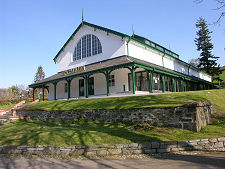 Strathpeffer Pavilion |
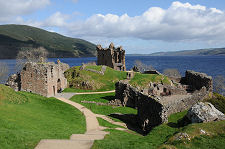 Urquhart Castle |
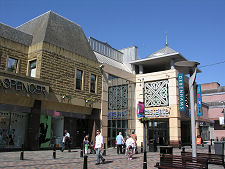 Inverness |
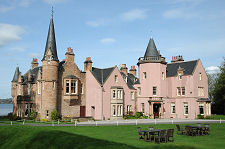 Bunchrew House Hotel |
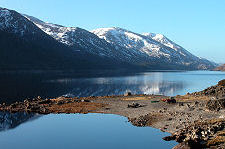 Loch Mullardoch |
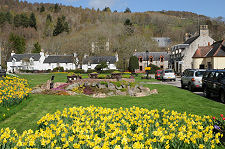 Drumnadrochit |
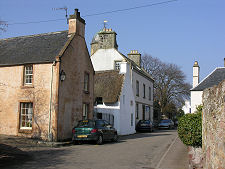 Cromarty |
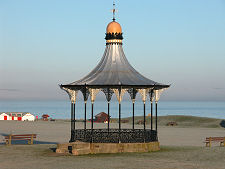 Nairn |
 North Kessock |
 Glen Ord Distillery |
 Culloden |
