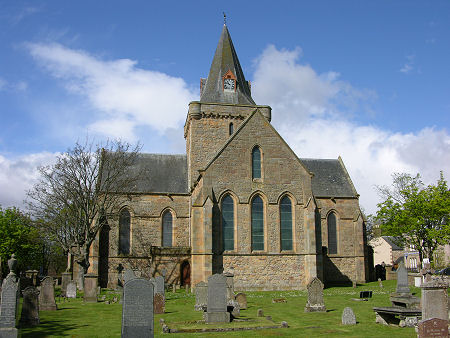
 Dornoch Cathedral, where Jean Gordon was Buried |
Jean Gordon, Countess of Bothwell and later Countess of Sutherland, lived from 1545 to 14 May 1629. She was a noblewoman who found herself close to the centre of Scottish politics during an especially turbulent period. The wider picture in Scotland at the time is set out in our Historical Timeline.
Jean Gordon was the daughter of George Gordon, 4th Earl of Huntly, and Elizabeth Keith. She grew up in the ancestral home of Huntly Castle. A life of privilege came to a sudden halt when George Gordon, serving at the time as Lord Chancellor of Scotland, rebelled against Mary Queen of Scots. He was defeated at the Battle of Corrichie, near Aberdeen on 28 October 1562. George Gordon was killed during the battle and one of his sons was subsequently executed.
The family's relations with the Queen were subsequently repaired, and both Jean and her mother were given positions in the Royal Court. Her eldest surviving brother became the 5th Earl of Huntly in an arrangement that included Jean's arranged marriage to James Hepburn, 4th Earl of Bothwell. The marriage took place on 22 February 1566 and Jean's dowry of £8,000 (Scots) helped clear Bothwell's debts. It is possible that Bothwell was already romantically involved with Mary, Queen of Scots, at the time of his marriage to Jean. He certainly was by the time he helped in the murder of Mary's husband, Lord Darnley, on 10 February 1567. On 21 April 1567 Bothwell kidnapped Mary, Queen of Scots and the two were married on 15 May 1567, an act which led to the downfall of both.
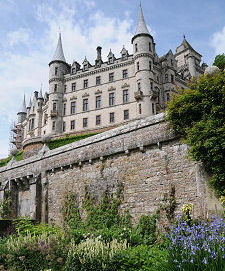
Jean Gordon had divorced Bothwell, on the (presumably contrived) grounds of his adultery with one of her servants, Bessie Crawford, on 3 May 1567. Following the divorce she moved back to northern Scotland. On 13 December 1573 she married Alexander Gordon, 12th Earl of Sutherland. They went on to have seven children together. During the latter part of her marriage to Alexander Gordon his ill health led to her taking over the running of the vast Sutherland estates. In 1599 she married for the third time, to Alexander Oglvy of Boyne, who had been a suitor before Jean's first marriage. After her death at Dunrobin Castle in 1629, Jean was buried at Dornoch Cathedral.
This biography draws on research first published in "The Biographical Dictionary of Scottish Women".