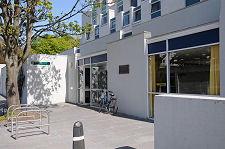
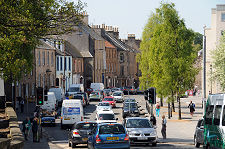
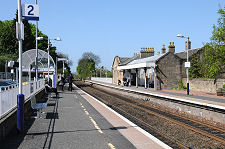
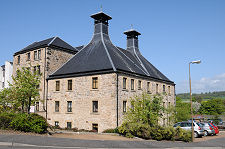
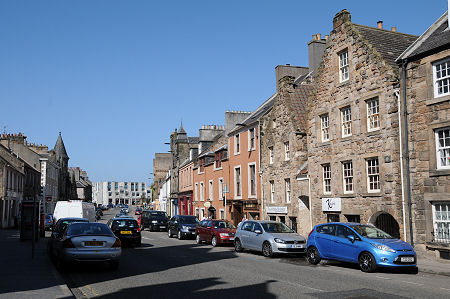
 Linlithgow High Street |
Linlithgow is a town with an ancient and distinguished history. Linlithgow Palace was a favourite home of the Stewart kings and queens and was the birthplace of Mary, Queen of Scots, and Linlithgow itself was an administrative centre for many centuries. Today the town is bypassed to the north by the M9 but remains an exceptionally busy place: and it retains enough of the character and charm of its past to place it high on any list of "must visits" in central Scotland.
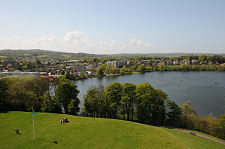
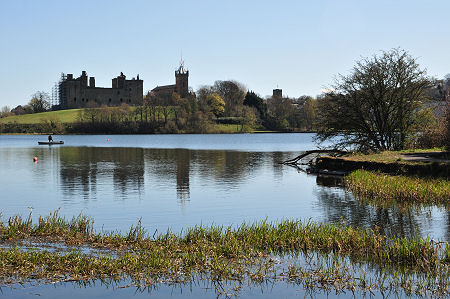
The name appears to mean "place by the lake in the damp hollow" in the ancient Brythonic language. The lake in question is Linlithgow Loch, which is some three quarters of a mile long by a quarter wide and hems the town in on its northern side. Brythonic was the language spoken in the Kingdom of Strathclyde during the dark ages and it seems reasonable to assume that the settlement first grew here during a period when it was under the influence of Strathclyde. As the dark ages progressed, this area fell within what became known as Lothian, and under the control of the Angles of Northumbria.
It seems likely that it was the Angles who first fortified Linlithgow, building a wooden defence on the promontory of higher ground projecting into the southern side of the loch. By about 1130, Linlithgow had grows sufficiently in size and importance to be made a Royal Burgh by King David I. David also redeveloped the earlier defensive structure and built what has been described as a royal manor on the hill overlooking the loch, and immediately to the north of the centre of the town. By this time there was also a church dedicated to St Michael close by. (Continues below image...)
 Linlithgow Loch |
One of the factors which probably contributed to Linlithgow's early growth was that it lay astride the main road from Edinburgh to Stirling and approximately fifteen miles from each. By the end of the 1200s the town was home to a priory and a number of mills, while tanning was growing in importance as an industry on the edge of the town. In 1301 King Edward I of England had a large wooden castle built around the royal manor and this became a focus of the English occupation of Scotland. The English abandoned Linlithgow Castle following their defeat at the Battle of Bannockburn in 1314, and the Scots removed the castle and restored the royal manor.
Linlithgow grew in importance through the next two centuries, despite repeated attacks by the English: most notably in 1424 when much of the town, plus the royal manor and St Michael's Church, were burned down. The Stewart kings moved to replace the old royal manor with the much larger Linlithgow Palace, and the rest of Linlithgow was likewise rebuilt, making it by the middle of the century one of the most important towns in Scotland. More surprisingly it also established itself as an important trading centre, initially exporting and importing via its port at Blackness. In the early 1400s the Burgh of Linlithgow built a more convenient harbour on a broad promontory (or "ness") projecting into the south side of the River Forth to allow it to export the ever-increasing amounts of coal being mined in the area. The "burgh's town on the ness" became Borrowstounness, and, eventually, Bo'ness.
On 8 December 1542 Mary, Queen of Scots was born in Linlithgow Palace. By 1600 Linlithgow was considered more important than Stirling, but the departure of the Scottish royal family to London following the Union of the Crowns in 1603 led to a period of decline. Linlithgow again bounced back, and by the end of the 1700s was a centre for the tanning, shoemaking and textile industries. Engineering and distilling arrived during the following century and an armaments factory was built during World War One.
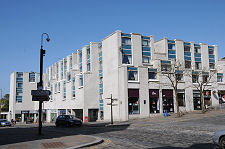
More recent times have seen Linlithgow undergo a series of developments. In 1967 a chunk of the town centre including 90 houses from the 1800s and earlier was simply swept away to make room for "The Vennel", which today dominates the centre of the town. There were much worse redevelopments being undertaken in other Scottish towns at around the same time, but there is no getting away from the fact that Linlithgow would be a significantly better looking place today if the original buildings on this site had been retained. More positively, in 1972 a stretch of the M9 built to the north of Linlithgow Loch opened and took through traffic out of the town.
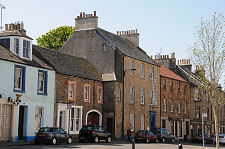
Today's Linlithgow lies principally along its east-west High Street. Parallel to it on rising ground to the south is the main Glasgow to Edinburgh railway line, built here in 1842, and the Union Canal built just 20 years earlier. Immediately to the north of the central portion of the High Street is the large mound on which are located St Michael's Parish Church and its even more impressive neighbour, Linlithgow Palace.
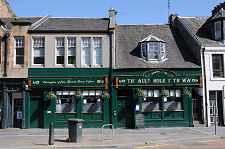
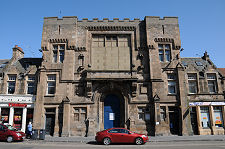
The heart of the town is the open area in front of the magnificent Burgh Halls or Town House, built in 1668 to replace a building destroyed by Oliver Cromwell in 1650. Here you find the Cross Well, built in 1807 as a copy of its 1628 predecessor. One side of this square carries a range of attractive shops which lead out into the High Street. On the other is The Vennel.
Linlithgow carries its history well. It offers superb visitor attractions in Linlithgow Palace and St Michael's Church interesting shopping, the Linlithgow Museum, the Linlithgow Canal Centre on the restored Union Canal, excellent rail links, a beautiful park, and a large loch right on the doorstep. No surprises, then, that it can be very busy, but time it right and you can still have parts of it to yourself.
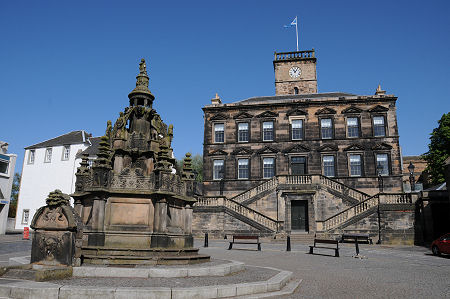 Burgh Halls and Cross Well |
|
|
|
Visitor InformationView Location on MapWhat3Words Location: ///riding.capillary.along |
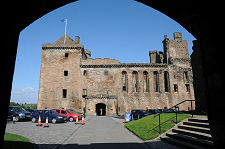 Linlithgow Palace |
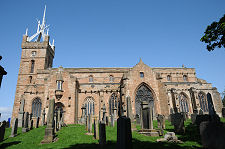 St Michael's Church |
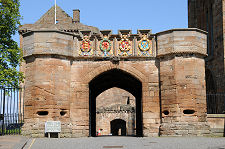 Palace Gateway |
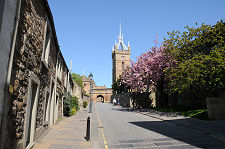 Kirkgate |
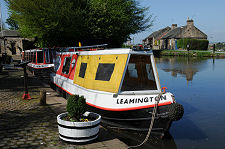 Linlithgow Canal Basin |
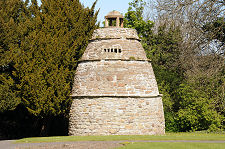 Ross Doocot |
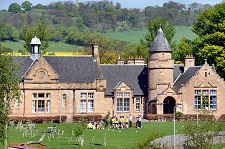 Low Port Primary School |
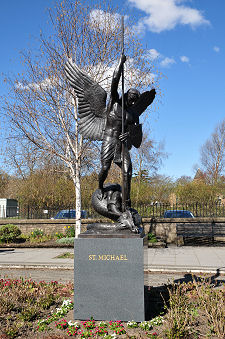 Statue of St Michael |