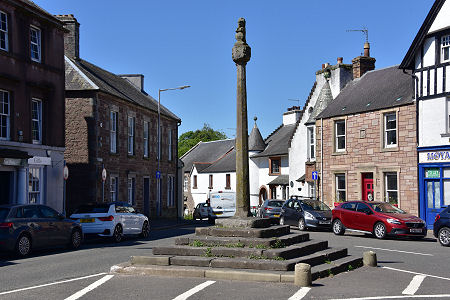
 The Mercat Cross |
Doune lies seven miles north-west of Stirling. Travellers driving along the A84 gain only the briefest of glimpses of the village as they pass through: its centre lies a little off to the north of the main road. The slight detour is well worth making. On the other hand, the A820 from Dunblane passes through the heart of the village providing, at times, an excellent argument for the abolotion of the motor vehicle.
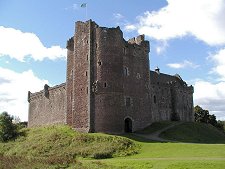
Doune's history goes back at least as far as the Romans, who probably had a fort here in the area later occupied by Doune Castle. The discovery of medical instruments suggests the Romans also had a hospital here, on the site of what is now Doune Primary School.
The village's more recent history owes much to the castle in whose shadow it originally grew. Over the years the centre of the village migrated steadily westwards, towards the line of the main drove route from the Highlands to the markets of central Scotland. Doune Castle now stands a little apart from the village and to its east.
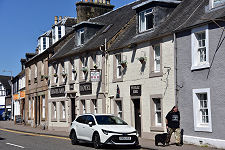
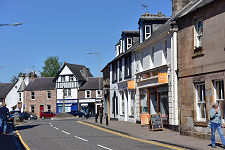
The village has a range of small shops intermingled with cottages. A surprise in the centre is the location on the main street of the headquarters of Harvey Maps, looking a little like it belongs to another time and place. (Continues below images...)
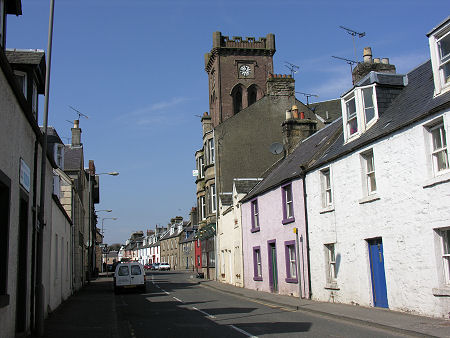 Doune's Main Street |
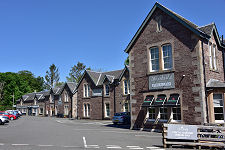
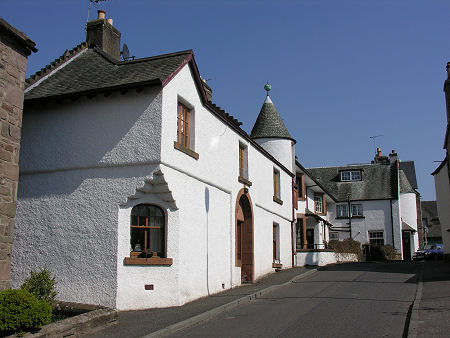 George Street |
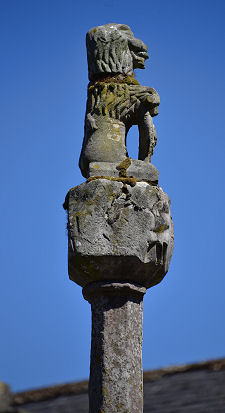
Doune's focal point is the mercat cross, standing in a triangular area at which the main streets intersect. The mercat cross was the commercial heart of the village, and the centre of the many fairs held in Doune over the course of the year. A more grisly testament to the movement of the centre of the village can be seen from the declaration of King Charles I that public executions should take place at the mercat cross rather than, as until then, at the Castle.
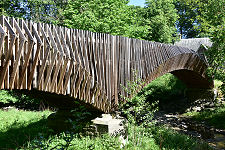
Doune is bounded to the south by the River Teith. The river is crossed by the A84 at the Bridge of Teith. The bridge here was built by the royal tailor, Robert Spittal of Stirling, in 1535. There had previously been a ferry across the river at this point.
The story goes that Robert Spittal wanted to cross the river one day but was a little short of cash. The ferryman refused to carry him across for less than the standard fare. It is said that Robert Spittal's subsequent building of the Bridge of Teith had less to do with his concern for the public good than his desire to do the ferryman out of a job. Spittal's bridge was widened on its western side in 1866 to double its width, though it remains narrow by modern standards.
For a time, Doune became famous for the manufacture of pistols before being displaced by more highly industrialised centres like Birmingham. It is said that a pistol made in Doune fired the first shot of the American War of Independence.
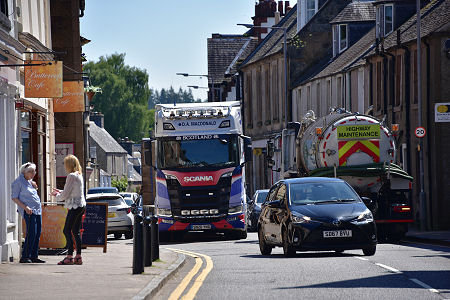 Heavy Traffic in Main Street |
|
|
|
Visitor InformationView Location on MapWhat3Words Location: ///refrained.surfer.same |
 Main Street |
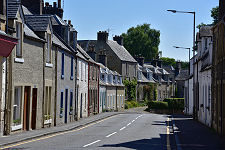 Cottages on Main Street |
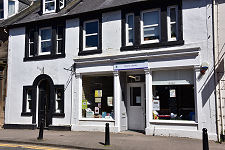 Doune Library |
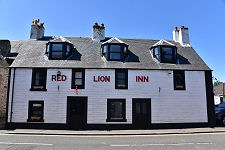 Red Lion Inn |
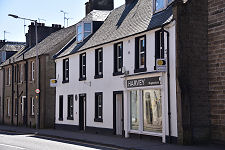 Harvey Mapmakers |
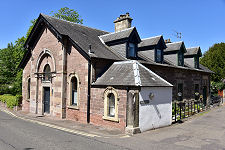 Moray Institute |
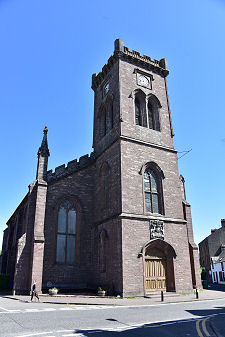
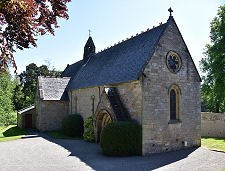 St Modoc's Church |
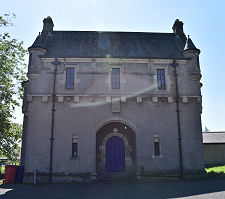 The Muir Hall |
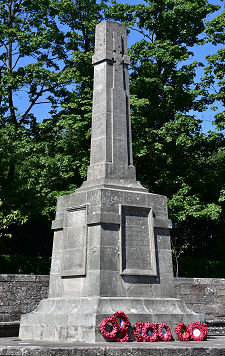 War Memorial |