 Rocks Road |
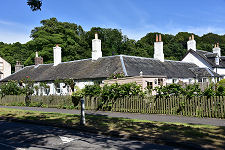
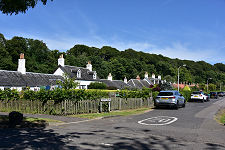
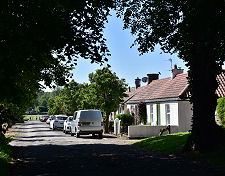
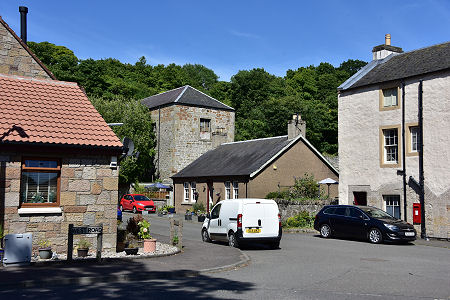
Charlestown stands on and above the north shore of the Firth of Forth around four miles north-west of the Forth Bridges. It came about as a planned village created by Charles Bruce, the 5th Earl of Elgin, in the 1750s. Not only did he give it his name, he also gave it his initials. The original layout of the village, still visible, is in the form of the letters "CE", from his formal title of Charles Elgin.
This was all part of Charles' grand design to make most effective use of his estate's main assets: the coal and the limestone that lay under it. Lime had been processed at the neighbouring village of Limekilns for centuries, but what Charles Elgin built at Charlestown was on a truly industrial scale.
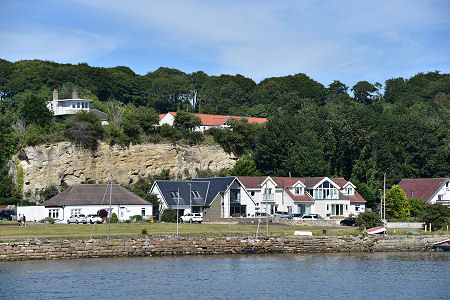
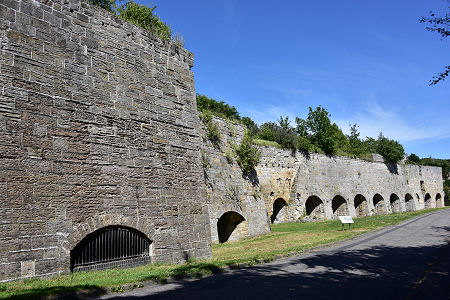
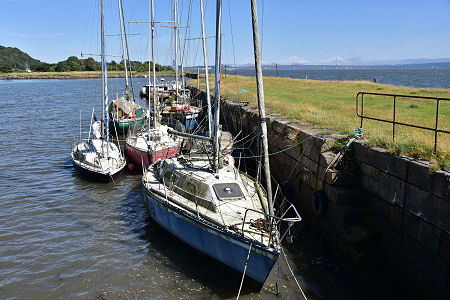
The first part of the village to be established was on higher ground just to the north of the shoreline. The 30ft cliffs overlooking the sea then had limekilns quarried into them: six initially, with the number eventually growing to fourteen. They remain there today, besides what is now the approach road to a modern housing estate and the harbour created to carry the quicklime and the coal to the rest of Scotland and beyond. The harbour is an oddity, as signs declare it to be closed and the boats moored there on our last visit, in July 2025, were in a very poor state, gently rotting away if not actually already sunk. The contrast with the nearby upmarket housing is striking. (Continues below images...)
 The Two Levels of the Village Seen from the Harbour |
 Charlestown Limekilns |
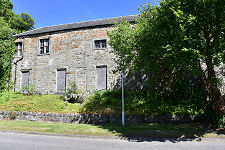
It is difficult to imagine today, but Charlestown was once one of the biggest and most important industrial centres in Scotland. By 1774 the limekilns and harbour were served by the Elgin Railway, which connected them to Dunfermline. This originally had wooden rails and the wagons were hauled by horses, for whom stables and a granary were built.
And if coal extraction and lime conversion were not enough, Charlestown already had an established iron industry using locally quarried ironstone. There had been an iron mill on the coast to the west of the site of the village from about 1630, making the metal pans in which sea water was evaporated to produce salt all along the River Forth. The bay here is still called Ironmill Bay. Later the iron ore and coal from Fife was shipped across the Forth to feed the massive Carron iron works.
In the mid 1800s the harbour at Charlestown was extended and the Elgin Railway was converted to steam. Ships were built here for a time, but a more enduring industry was ship-breaking. Some of the German Imperial Fleet refloated in Scapa Flow after the First World War were towed here to be broken up. Today, the naval theme continues a mile to the west, where the piers of the Royal Navy's armaments depot at Crombie project into the Forth; and two miles to the south-east, where the naval dockyards at Rosyth are visible from Charlestown.
Lime production diminished from the 1930s and the limekilns at Charlestown finally closed in 1956. Work on their restoration began in about 1990 and today it is still possible to get a sense of the scale of what was once done here: though not of the associated noise, heat and smell.
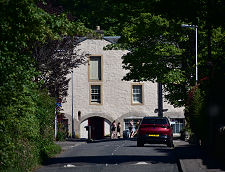
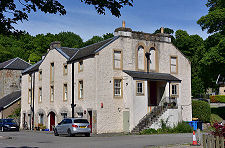
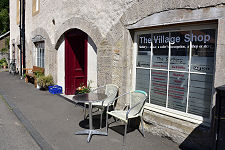
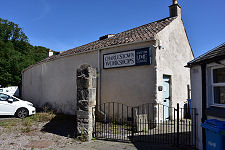
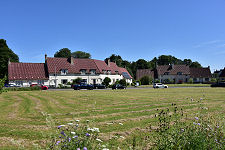
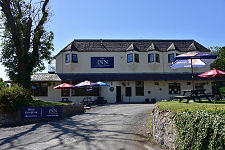
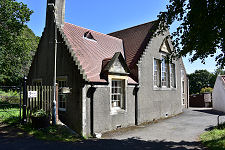
The upper part of the village retains much of its original plan. The Elgin Hotel, now known as The Inn at Charlestown, was added in 1911, and a little to the north the granary and stables still stand, with the granary now converted into the village shop. Close by, in the Charlestown Workshops, is the Scottish Lime Centre, established in 1994 to tackle the shortage of skills in the field of traditional building technology. In this sense at least, history has come full circle.
 Derelict Boats in Closed Harbour |
|
|
|
Visitor InformationView Location on MapWhat3Words Location: ///plotter.rope.respected |
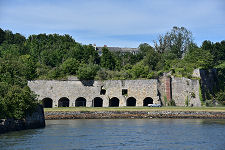 Limekilns from Harbour |
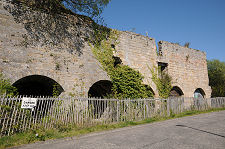 Closer View of Limekilns |
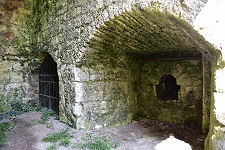 Inside a Limekiln |
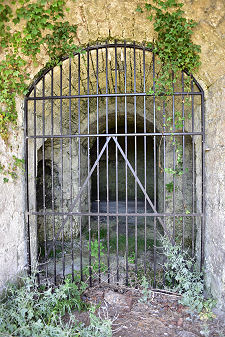 Inside Another |
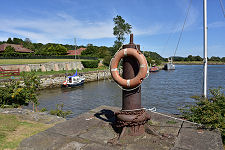 Closed Harbour |
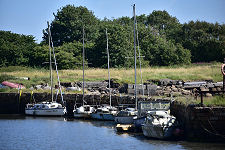 Another View of the Harbour |
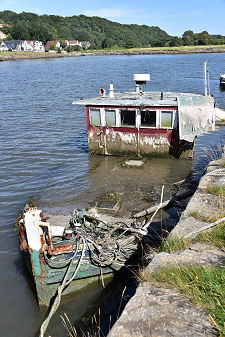 A Sunk Boat in the Harbour |
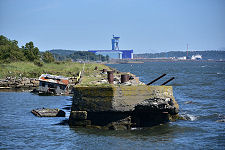 The View East to Rosyth |
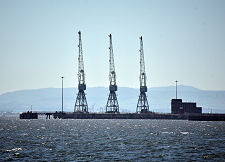 The View West to Crombie |