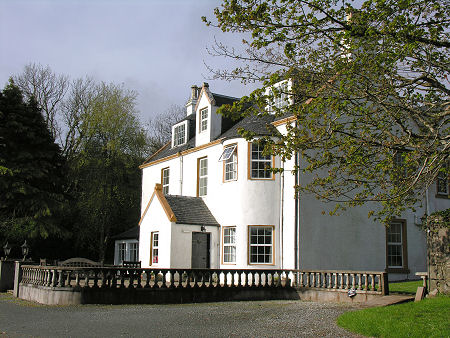
 Greshornish House Hotel |
The road from Dunvegan towards Portree sweeps over moorland at the foot of the Waternish Peninsula before crossing land at the head of Loch Greshornish and bypassing the village of Edinbane.
Since the new road was built bypassing the village there is no need for visitors simply intent on crossing Skye to come to Edinbane at all. This has made the village a much quieter place than it used to be: now you can enjoy it without having to dodge the through traffic.
There has been a settlement at the head of Loch Greshornish since before 1600, largely based on crofting and fishing. Today the loch, curiously invisible from the village, is home to shellfish farming.
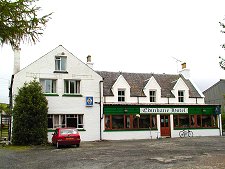
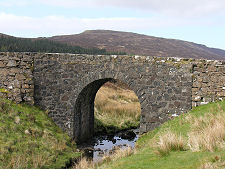
Edinbane is popular with those wanting somewhere quieter than Portree to base themselves when touring northern Skye. There are two hotels in the village, the Edinbane Hotel and the Lodge Hotel. The latter comes complete with the Lodge Restaurant, and the pair can be found hiding behind a stone wall near the bridge crossing the Abhainn Choishleadar as it flows through the centre of the village. Also nearby is the Greshornish House Hotel, reached along a minor road up the west side of Loch Greshornish.
A surprise in the centre of Edinbane is the ex-Gesto Hospital, white-painted like many other buildings in the village. The hospital was built here by a local man, Kenneth MacLeod who had returned to the area after making his fortune as a tea planter in the Far East. It is now closed and the subject of a local campaign to set up a facility for old people.
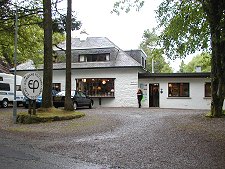
Hiding amongst large trees near the edge of the village is the Edinbane Pottery, complete with its wood-fired kilns and attractive craft shop.
If you are heading west towards Dunvegan from Edinbane, look out for the junction with the single track B886 on your right, at the memorably named Fairy Bridge. This leads north to Lusta, Stein, Trumpan and the other small settlements that punctuate the Waternish Peninsula.
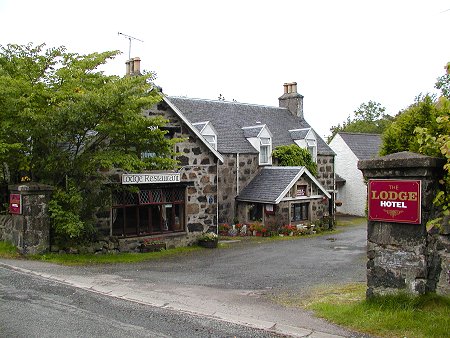 The Lodge Hotel |
|
|
|
Visitor InformationView Location on MapWhat3Words Location: ///spots.probe.finalists |
 Gesto Hospital (Now Closed) |
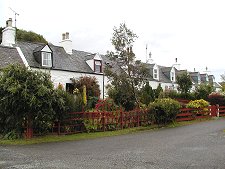 Village Cottages |