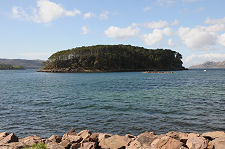
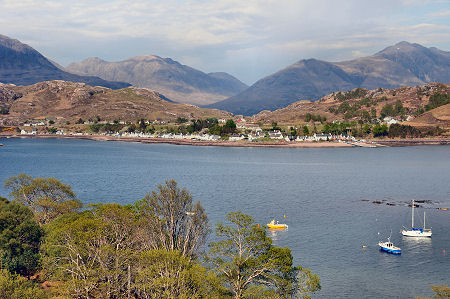
 View Across Loch Shieldaig of Shieldaig |
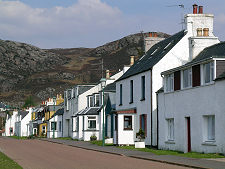
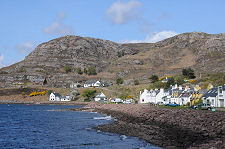
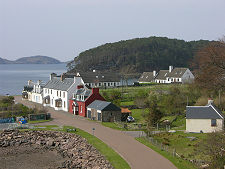
Shieldaig would be a finalist in any "most picturesque village in Scotland" competition. Its location is truly superb, on the edge of Loch Shieldaig, an offshoot of Loch Torridon, and perhaps best viewed from the minor road that twists and turns its way along the north coast of the Applecross peninsula from a junction a mile or so south of the village. From here it can be seen set against a backdrop that rises above its immediate headland and takes in the mighty mountains of Torridon, and Beinn Alligin and Liathach in particular.
Shieldaig was established in 1800. Its purpose was to attract families to take up fishing for a living; and, in the process, to help build up a stock of trained seamen who could be called upon by the Royal Navy during the Napoleonic wars.
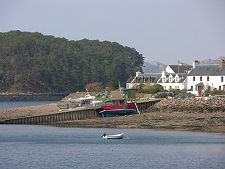
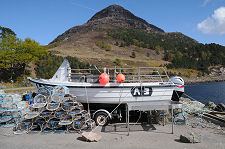
People were attracted to the village by the offer of grants from the Admiralty to support housing and boat-building, and Shieldaig flourished. After Napoleon's demise in 1815 the official support disappeared. But Loch Shieldaig and the surrounding waters had been famed for their herring since the days of the Vikings, and the village's continuing prosperity was for many years based on the success of its fishing fleet. (Continues below image...)
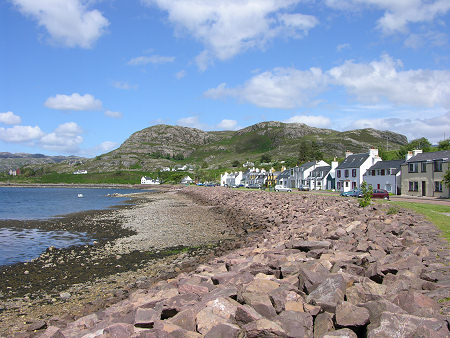 Shieldaig and Loch Shieldaig |
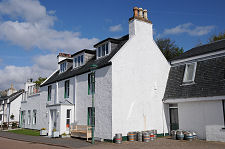
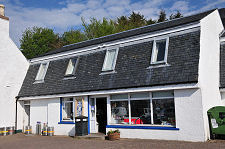
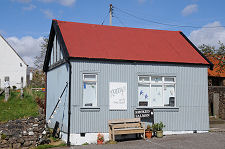
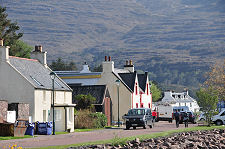
The village itself is a string of largely whitewashed cottages and other buildings laid out along the shore of the loch with others scattered up the rising ground behind it. What is especially nice is the way the seaward side of the road through the village has been grassed over for the benefit of those wishing simply to enjoy the views, and some of the finest sunsets imaginable. Another especially nice touch is the provision of parking that helps keep the village street itself clear of the clutter of parked cars that detracts from so many Highland villages.
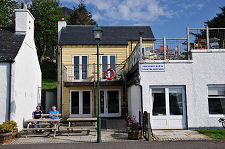
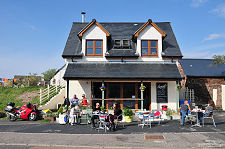
Shieldaig comes complete with a small collection of tourist services, including a shop and a hotel, the excellent Tigh an Eilean Hotel which offers comfortable accommodation and outstanding dining. Next door to the hotel and under the same ownership is the Shieldaig Bar, whose Coastal Kitchen offers bistro-style dining upstairs or on a roof terrace. Towards the southern end of the village is Nanny's Cafe. Other accommodation available in Shieldaig includes a campsite.
Views over the loch are dominated by Shieldaig Island, whose dense coverage of mature Scots pine contrasts strongly with the bare mountainsides surrounding the loch. The island has been owned by the National Trust for Scotland since 1970. It is believed that the trees were planted, probably with seeds taken from Speyside, in the mid 1800s.
There are concerns that these imported pines may cross pollinate the subtly distinct - and increasingly rare - native Highland Scots pines that grow in Glen Shieldaig, and the eventual aim (over a century or two) is to replace the Speyside trees with Highland trees.
Shieldaig has for many years been bypassed by the A896 as it curves round on its way from Lochcarron and Kishorn to Torridon. Whatever you do, make sure you don't make the mistake of overlooking this little gem. If you are in the Western Highlands, make sure you plan your route in a way that allows you the chance to see Shieldaig for yourself.
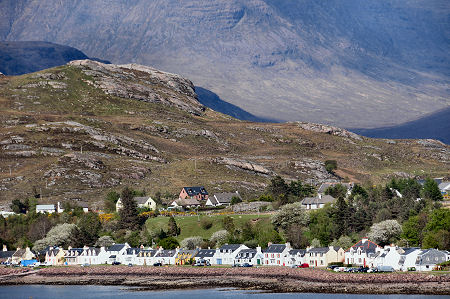 Telephoto View of the Village |
|
|
|
Visitor InformationView Location on MapWhat3Words Location: ///scribble.game.every |
 Shieldaig from the Main Road |
 Shieldaig Jetty |
 Fishing Boat at the Pier |
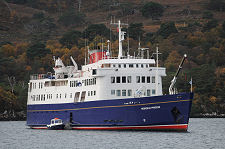 Hebridean Princess at Anchor |
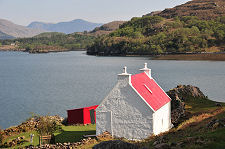 Cottage Used as Navigation Marker |
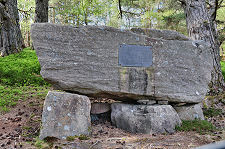 Opening of the Kenmore Road, 1970 |
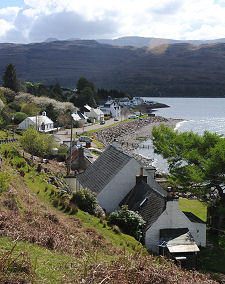 The Village from the North |