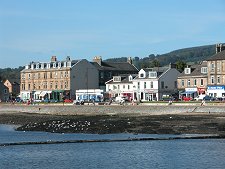
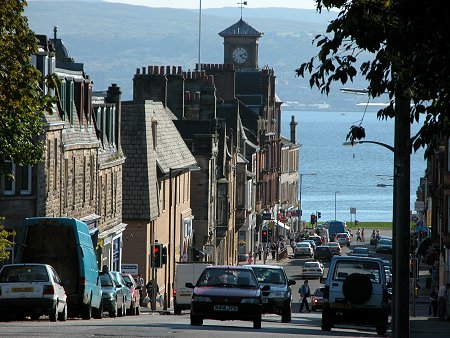
 View Across the Clyde |
Helensburgh owed its growth and popularity to its attractive seaside location on the Clyde, combined with historically good transport links and a large population within easy travelling distance.
Its origins date back to about 1600, with the building of Ardencaple Castle on the west side of the town. Little trace of the castle now remains. In 1776 it was overbuilt with spa baths by Sir Ian Colquhoun of Luss, and he also built a planned town named after his wife, Helen. Its early success was closely tied to the ferry service he also organised, linking Helensburgh to Greenock. This allowed those who could afford it to earn their living on the south side of the Clyde while living on the more attractive north bank.
One of the most striking features on Helensburgh's waterfront is an obelisk dedicated in 1872 to the second big name to feature in the town's history. This was Henry Bell, who built the Europe's first commercial steamboat, the Comet, to bring customers from Glasgow to his wife's hotel. And a pier to land them at. Not far away is a statue commemorating another famous son of Helensburgh, John Logie Baird, one of the fathers of television.
Helensburgh's place as one of the premier west coast resorts was secured with the arrival of the Glasgow, Dumbarton and Helensburgh railway in 1858 with a station in the centre of the town.
Shortly afterwards a new pier was built to serve the demand for steamer services to many destinations on the Clyde, Loch Long and beyond. And in 1894 a second, upper, railways station came to Helensburgh, on the line from Glasgow to Fort William and Oban.
Helensburgh today continues to offer excellent rail links to Glasgow, Fort William and Oban, though the passenger ferries that once ran across the Clyde ceased to operated in 2012. It is also ideally placed for the motoring visitor, close to Loch Lomond and a good touring base for a large part of western Scotland.
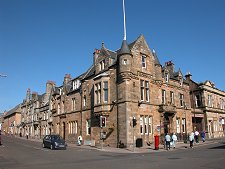
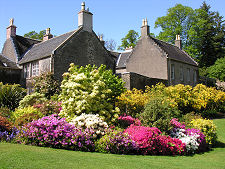
The town offers a range of shopping to suit most tastes and needs, and some very nice architecture. The highlight is Hill House. This was completed in late 1903 for the Glasgow publisher Walter Blackie and designed by the architect Charles Rennie Mackintosh. Today it is in the care of the National Trust for Scotland.
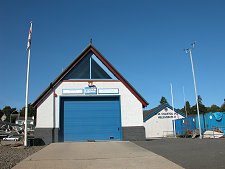
The west end of Helensburgh almost merges into the settlement of Rhu, which is one of the main yachting centres on the Clyde estuary. Here you find the lifeboat and coastguard stations. It is also the location of an annual New Year's swim in the Clyde.
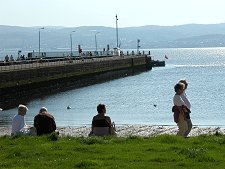
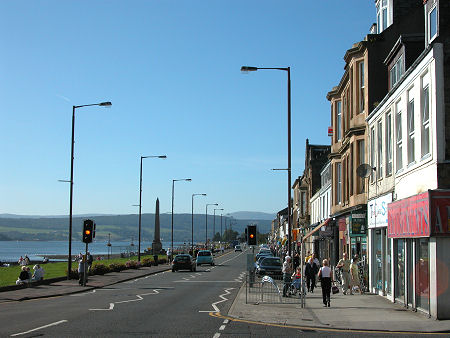 Sea Front |
|
|
|
Visitor InformationView Location on MapWhat3Words Location: ///trek.sped.library |
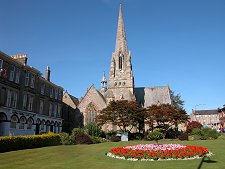 Colquhoun Square |
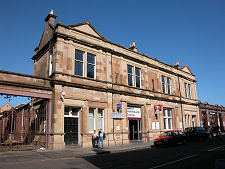 Helensburgh Central Railway Station |
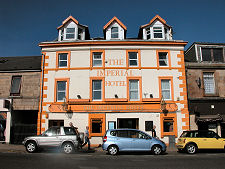 The Imperial Hotel |
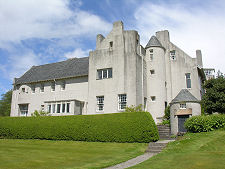 Hill House |