 |
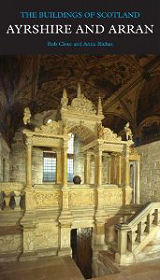
Ayrshire and Arran has become the twelfth area to be covered by the Pevsner Architectural Guides to the Buildings of Scotland, and this is a cause for celebration by anyone with an interest in a fascinating part of Scotland. There have been architectural guides to Ayrshire and Arran in the past, but the best of them was published two decades ago: and in any case cannot really be compared with the sheer scale and comprehensive coverage of this magnificent book. There is a sense in which once the Pevsner Architectural Guide to an area has been published, a definitive encapsulation of everything of interest in the built environment of that area suddenly becomes available. As a result an area of the map that was previously only hazily or partially filled in is suddenly readily available in fine detail and great clarity. It is impossible to recommend this book too highly.
As with all the books in the series, the heart of "Ayrshire and Arran" is the gazetteer. In this case that means some 600 pages on Ayrshire and another 45 on Arran. Here you find, in alphabetical order, entries about every significant settlement in the area covered, and about every significant building found outwith settlements. The entry for Girvan, for example, runs to no fewer than 11 pages, including a map of the town, one of a dozen detailed maps found within the book. After an introduction to Girvan, there are sections about seven churches within the town, two cemeteries, and twelve public buildings. You then find a "Description" comprising an annotated four page tour of Girvan, and a page on neighbouring Newton Kennedy. Meanwhile, the gazetteer entry for Dumfries House extends to over eight pages, and similar coverage is given to Crossraguel Abbey.
It is easy to forget that while the gazetteer forms the largest part of the book, it is preceded by 86 pages of descriptive chapters that cover topics such as topography, churches (medieval and post Reformation), castles and tower houses, country houses and estates, communications and transport: plus industrial, rural and burgh town and village buildings. In the context of Ayrshire, the section on industrial buildings helps set in context the industries that, over several centuries helped shape (in some cases quite literally) the landscape and built heritage of the area.
InformationHardcover: 800 pagesYale University Press yalepress.yale.edu 1 October 2012 Language: English ISBN-10: 030014170X ISBN-13: 978-0300141702 Size: 22 x 13 x 4.8 cm Buy from Amazon (paid link) Visit Bookshop Main Page |