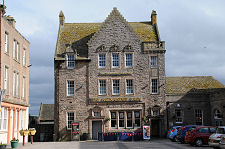
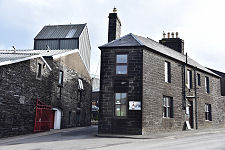
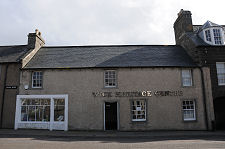
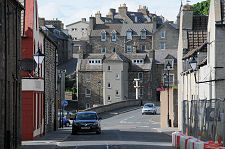
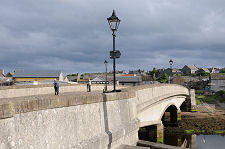
 Bridge Street in Wick |
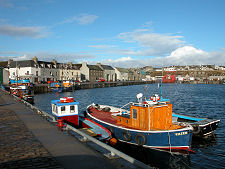
Wick, which was for nearly 500 years the administrative centre of Caithness, lies on the east coast of northern Scotland, some 15 miles south of Duncansby Head. The name comes from the Norse Vik, meaning bay, and it was the Vikings who first used the mouth of the Wick River where it flows into Wick Bay as a harbour for their longships and trading vessels.
Wick still has the feel of a town that revolves around its harbour and its seafaring traditions, almost like an Aberdeen in miniature. The irony is that for much of its life, most of Wick's trade and fishing took place via the tiny hamlets of Papigoe and Staxigoe and their better sheltered but much smaller harbours just along the coast to the north-east.
This started to change when Sir John Sinclair of Ulbster built a quay at Wick in 1768 in order to promote the town as a centre for herring fishing. Progress was very slow and in 1780 under 400 barrels of salted fish were caught and processed.
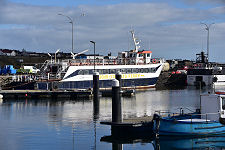
But the British Fisheries Society stepped in during the 1780s and within a decade 200 fishing boats were based in Wick and the annual catch had increased to 13,000 barrels of salted herring. (Continues below image...)
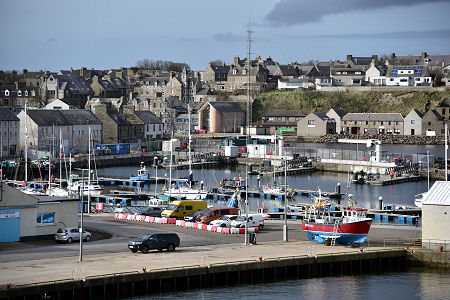 Wick Harbour |
Harbour improvements by Thomas Telford followed in 1810. He also bridged the River Wick, improving the connections between Wick on the north bank and the new town, Pulteneytown, he designed for Sir William Pulteney to accommodate the fast growing population, on the south bank.
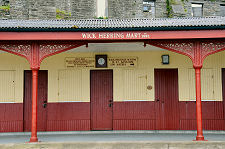
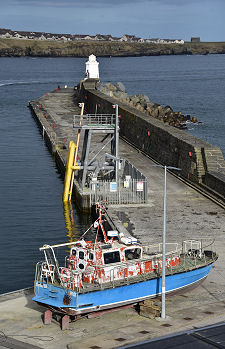
An additional pier followed in 1831, though the following year there was a setback when an outbreak of cholera in Wick led many fishermen to move to Peterhead. Despite this the fishing industry in Wick continued to thrive, making it for a time the busiest fishing port in Britain. In the 1860s there were 1100 herring boats operating out of the harbour and they were supported by no fewer than 650 coopers in the town. Most activity took place during a 12 week period in the summer when the vast shoals of herring were passing around the Caithness coast.
During this time the town's normal population of 6,000 increased to 15,000 as migrant workers, many from the western and northern isles, flocked in to help process and pack the fish, mend nets, and provide all the other services demanded by such a high level of economic activity. At the height of the season the town's 47 inns were between them selling 800 gallons of whisky each week. To put all this in perspective, Wick's total population today is around 8,000.
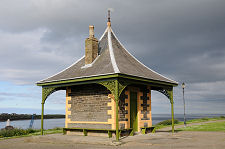
Failure to take steps to conserve stocks meant that the herring was in steep decline by the 1930s, by which time fewer than 30 fishing boats remained in Wick, mostly catching white fish. This figure has remained roughly constant since: although several hundred small fishing boats based along the Caithness coast and beyond still carry the "WK" Wick fishing registration code letters. A reflection of Wick's maritime heritage is found in the poignant Seafarers Memorial, which remembers those who died at sea around these coasts.
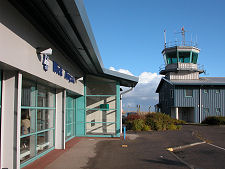
From the 1970s the gap left in the local economy since the departure of the herring was partially filled by the discovery of North Sea Oil. Wick has since been used as convenient base for offshore supply vessels. The traffic this generated has also helped the development of Wick Airport, using a Second World War airfield on the low plateau immediately to the north of the town.
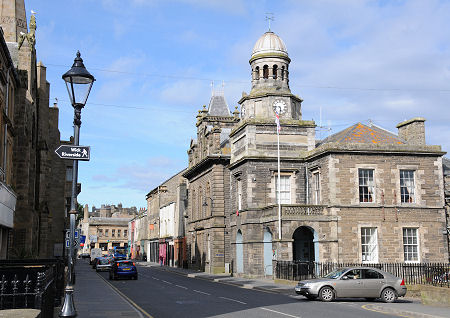
Today's Wick is an interesting mix of influences and elements. The harbour remains both active and interesting, while the town centre has considerable character without being either fossilised or run down. In Pulteneytown you find the Wick Heritage Museum, giving visitors a feel for the town's past and, in particular, its herring years. Nearby is another important visitor attraction, Pulteney Distillery. Wick offers two coastal castles in spectacular locations. Castle Sinclair Girnigoe is three miles north of the town near the Noss Head lighthouse, while the Castle of Old Wick is a mile south-east of it.
For collectors of extremes, another site of interest is just to the south of the bridge which carries Bridge Street and the A99 over the River Wick. Here you can find Mackays Hotel, a wedge shaped building which reaches its narrowest point nearest the bridge. This end of the building stretches the full length of Ebenezer Place, which appears in the Guinness Book of Records as the world's shortest street at 2.06m or 6ft 9in in length.
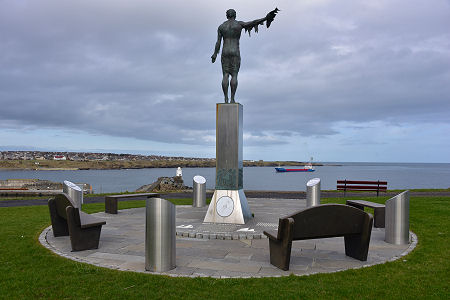 The Seafarers Memorial |
|
|
|
Visitor InformationView Location on MapWhat3Words Location: ///salsa.shortens.blown |
Wick In Fiction
|
 Eyes Turned Skywards by Ken Lussey (31 May 2018).
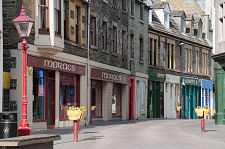 High Street Shops |
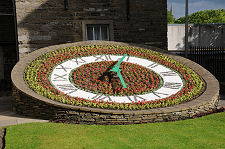 Town Hall Floral Clock |
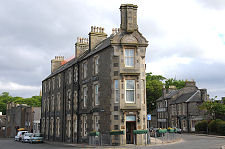 Mackays Hotel and Ebenezer Place |
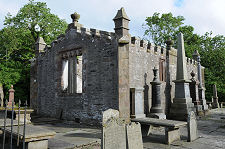 Sinclair of Stirkoke Aisle, Old Parish Church |
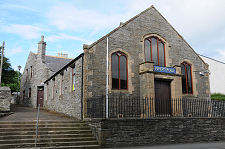 Wick Pipe Band Hall |
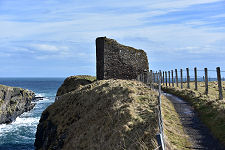 Castle of Old Wick |
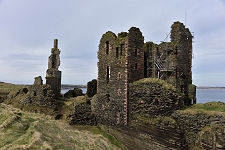 Sinclair Girnigoe Castle |
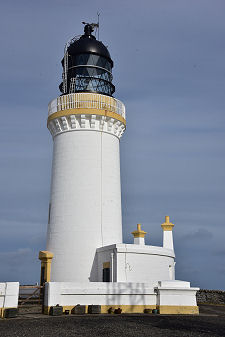 Noss Head Lighthouse |