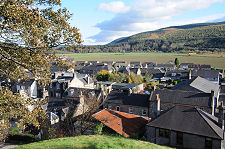
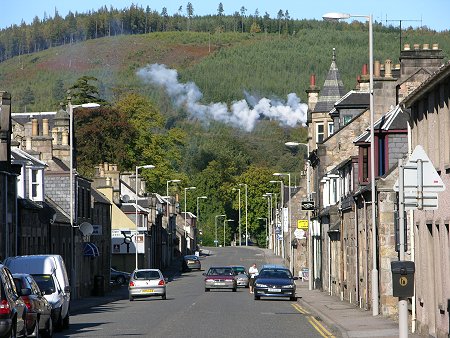
 Looking North Along New Street |
Rothes lies some ten miles south of Elgin on the A941. Given its location on the west side of the valley floor of the River Spey, it is no surprise to find that Rothes is home to a number of distilleries and associated industries.
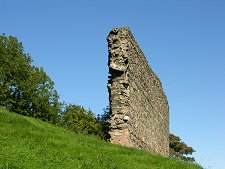
The origins of the village long predate distilling. A minor road on the west side of Rothes High Street leads past the entrance of Glen Spey Distillery and around a hill to the golf club. The observant will notice that the summit of the hill is home to a short stretch of high stone wall.
This is pretty much all that remains of Rothes Castle, originally built here by Peter de Pollok in about 1200 to command traffic up and down this stretch of the Spey Valley. On 29 July 1296 Edward I of England, the Hammer of the Scots, stayed at Rothes Castle (see our Historical Timeline). In the 1390s the castle and lands passed to the Leslie family, who later became Earls of Rothes.
By the time the Earls of Rothes sold their Moray estates to the Seafield family in about 1700, Rothes had grown beyond the immediate area of the now long ruined castle, and into a village aligned east-west along the line of the burn running into the Spey. After selling up, the Earls of Rothes moved to estates in Fife, including land which, much later, was to become the site of the new town of Glenrothes.
In 1766 the Seafields laid out a planned crofting township aligned north-south along the valley. This forms the basis of most of the road patterns in Rothes today, and the way the new planned village forms a cross as it overlays its old unplanned predecessor can still be seen on the ground. Many of Rothes' imposing stone buildings were built in the years that followed. These include the Town Hall on New Street, built in 1898 and now used as a community centre, and Rothes Kirk, built at the northern end of the High Street in 1781. The steeple that dominates this end of High Street was added to the kirk in 1870 to accommodate Nairn's old town clock, which had been gifted to Rothes.
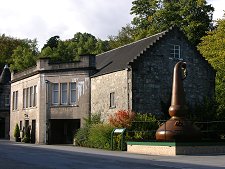
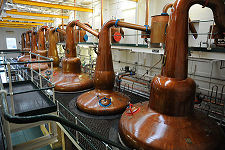
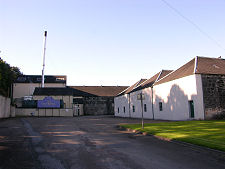
It was the quality of the water from the nearby hills, combined with the availability of good barley and the relative proximity to the important port (at the time) of Garmouth that first led to the development of distilling in Rothes. The first distillery to be established was Glen Grant which started production in 1840. It was followed by Glen Rothes in 1878; Glen Spey in 1885; Speyburn in 1897; and Glen Grant No.2 (later renamed Caperdonich) in 1897. The first four remain in production, while Caperdonich was mothballed in 2002.
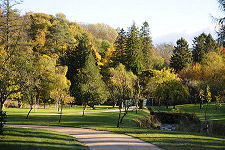
The best known of Rothes' distilleries is Glen Grant, in part because it is the only one with a visitor centre. In 1872 control of Glen Grant Distillery passed to the nephew of the founders, Major James Grant. He was an astute businessman, a keen traveller and a great innovator. In 1886 he established the superb 22 acre Glen Grant Garden in the glen behind the distillery, and this remains a popular visitor attraction today.
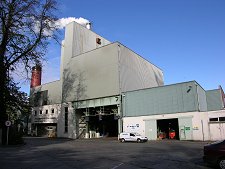
One of the ironies of a visit to Rothes is that, with the exception of Glen Grant, its distilleries remain very unobvious. As you approach from the north you descend into the village and most visitors will spot the white smoke from the modern-looking premises at the north end of Rothes, and many will assume it is a distillery. This turns out not to be the case, rather it is a factory which converts the by-products of the distillation process at many of Speyside's distilleries into animal feed.
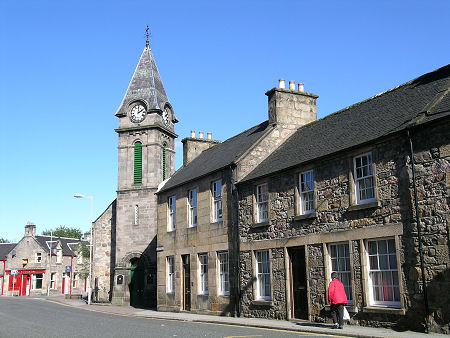 Rothes High Street |
|
|
|
Visitor InformationView Location on MapWhat3Words Location: ///fraction.hunt.erupt |
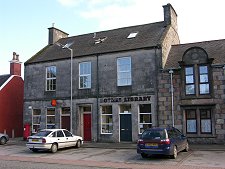 Library and Post Office |
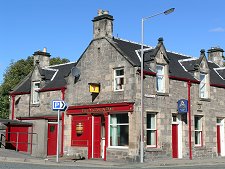 Victoria Bar |
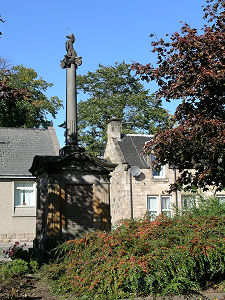 War Memorial and Anvil Garden |
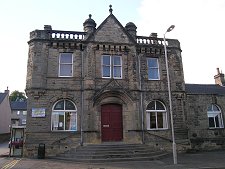 Town Hall, Now a Community Centre |