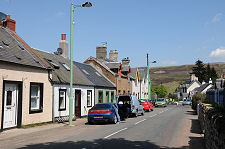
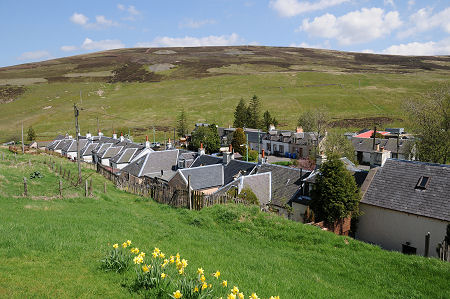
 The North End of Leadhills |
Leadhills is not an imaginative name for a village located high in the Lowther Hills and founded on lead mining, but it is an apt one. Scotland's second highest village (after nearby Wanlockhead) lies at a height of 395m or 1,295ft and is reached from the east via the B7040 from Elvanfoot or the B797 from Abington.
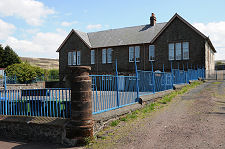
Leadhills may not quite be Scotland's highest village, but it does have a number of unique claims to fame. In 1741 it became home to the UK's oldest subscription library when 23 lead miners clubbed together to set up the Leadhills Reading Society. Membership was not cheap by the standards of the day, with a joining fee of three shillings (£0.15) and an annual subscription of two shillings (£0.10). This was an innovation picked up by other communities nearby including Wanlockhead and today the Library holds an excellent collection of books from its early years.
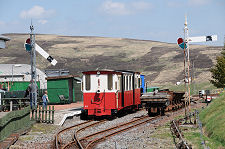
Leadhills is also home to Britain's highest adhesion (i.e. driven by the friction of its wheels on the track) railway. The Leadhills & Wanlockhead Railway is a 2ft narrow gauge railway built along part of the track bed of the branch line from Elvanfoot to Wanlockhead that operated from 1900 to 1938. A visit to Leadhills Station is a fascinating experience, with train rides and a range of ex-industrial engines on view in its high moorland setting.
In a country whose national sport is golf, Leadhills boasts Scotland's highest course at 456m or 1,500ft above sea level. This nine hole course is described as "not for the faint hearted" and lies just to the east of the village.
And for those in search of extremes, Leadhills graveyard is the final resting place of one John Taylor, a miner who died here in 1770. What is remarkable was that he was born in 1633, making him 117 years old when he retired as a miner in 1751, and 137 when he died. It is easy to dismiss this as a mason's typographical error on the gravestone, but it is said that he could remember seeing the eclipse of 1652. The absence of signposts in the graveyard means you might have difficulty actually finding John Taylor's gravestone to check for yourself. Less easy to miss and just outside the walls of the graveyard is the memorial to William Symington, a native of Leadhills remembered as the builder of the world's first practical steamboat.
Lead was mined in Leadhills from the 1100s, and in about 1500 the village also had a gold mine from which nuggets as large as 60g were extracted. By the 1660s the lead mines were owned by Sir John Hope, and profitable enough to justify building or improving roads the full 50 miles to Leith to allow the ore to be exported. The coming of the railway in 1900 was not enough to return the mines in the area to profitability, and mining activity in Leadhills ceased in 1928, though it continued on a commercial scale for another decade in Wanlockhead. You can find out much more about the industry at the excellent Museum of Lead Mining in Wanlockhead.
There was every chance of the village simply melting away when the mining ceased, but Leadhills' uniqueness extended to the freehold ownership of much of its land by the occupants. As a result the community survived with a determination exemplified by the rebuilding of its railway.
Leadhills certainly makes the most of its assets and local accommodation providers have also benefitted from the steady stream of footweary travellers following the Southern Upland Way long distance footpath which passes through nearby Wanlockhead.
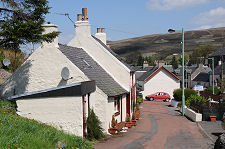
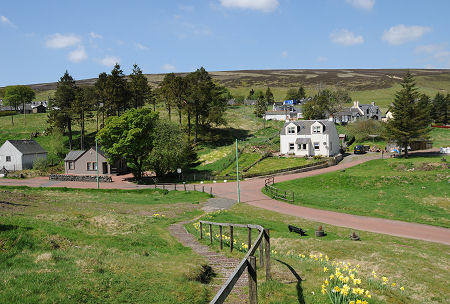 View Across Leadhills |
|
|
|
Visitor InformationView Location on MapWhat3Words Location: ///videos.claw.agrees |
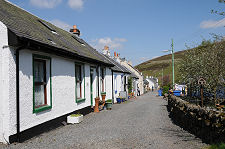 Symington Street |
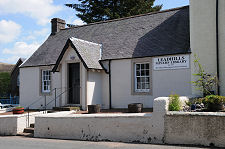 Miners Library |
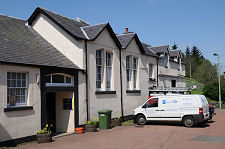
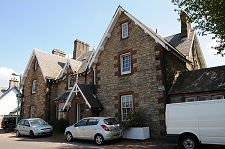 The Hopetoun Arms Hotel |
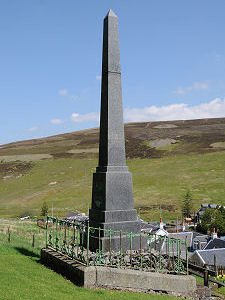 Symington Memorial |